


Why stackable large pallet ratings create risk in daily operations
For quality control and safety managers, stackable large pallet load ratings are easy to misread—and the consequences can be costly.
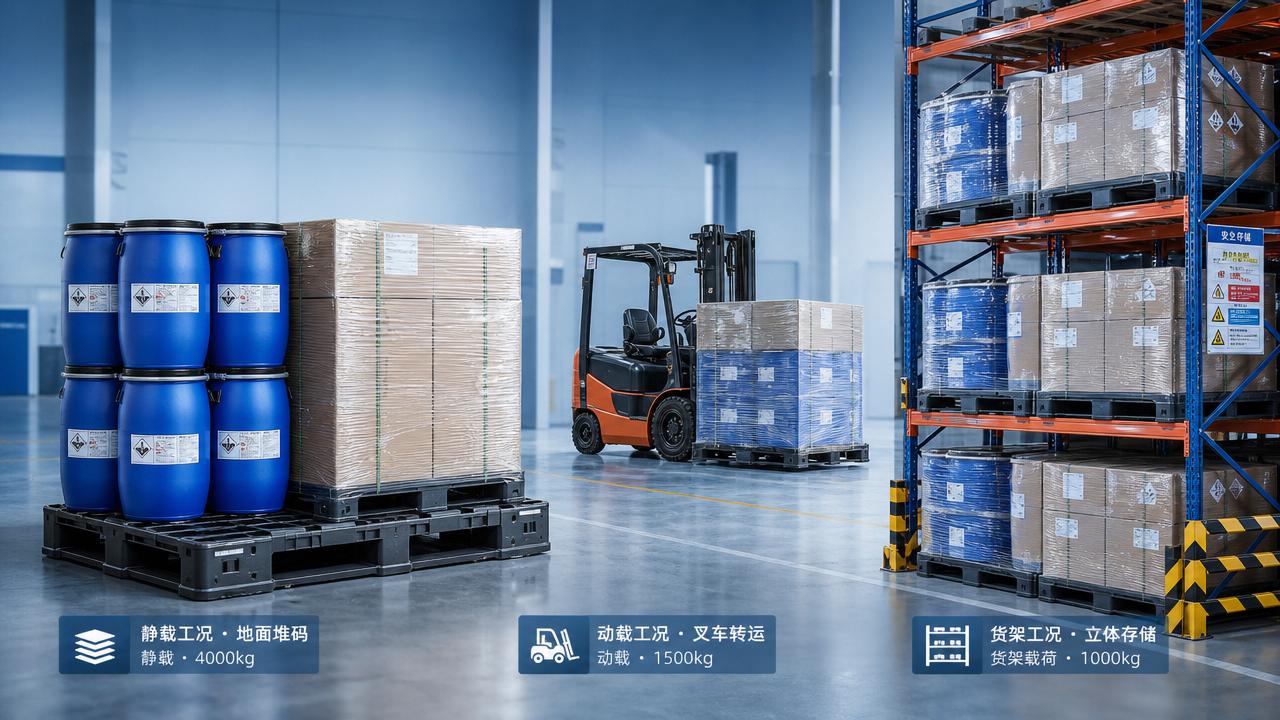
A stackable large pallet may look strong, yet static, dynamic, and racking loads mean different things.
Confusing them can cause bending, cracked decks, unstable stacking, and avoidable warehouse incidents.
In rubber and plastics operations, moisture, temperature change, and repeated handling make correct rating interpretation even more important.
How usage scenarios change the correct reading of a stackable large pallet
Load ratings only make sense when matched to the real scenario.
The same stackable large pallet can perform well on the floor but fail sooner on racks or under forklift movement.
Plastic materials such as HDPE and PP also respond differently to cold, humidity, and long-term stress.
Cold chain logistics: low temperature changes impact resistance
In cold chain logistics, a stackable large pallet faces shrink wrap tension, condensation, and frequent transport cycles.
Static load may remain acceptable, while dynamic load safety margins become more critical during forklift entry and turning.
Chemical storage: creep and stability matter more than appearance
In chemical storage, constant weight over long periods increases deformation risk.
A stackable large pallet must resist moisture, keep stable cargo support, and avoid hidden sagging during extended floor storage.
Typical rating mistakes that make a stackable large pallet easy to misread
- Treating static load as a moving load limit.
- Assuming rack load applies without checking beam spacing.
- Ignoring uneven load distribution across the deck.
- Overlooking temperature and humidity effects on plastic rigidity.
- Using visual thickness as proof of high-load capacity.
Scenario differences that affect stackable large pallet selection
A practical fit for high-humidity and industrial storage needs
One useful option is Europlastic pallets, durable, high-load capacity industrial storage plastic pallets.
The 1008 grid Chuanzi model uses HDPE and PP, weighs 17kg, and supports demanding industrial storage conditions.
Its moisture resistance helps in cold chain logistics and chemical storage, where wet surfaces and humidity can distort performance judgments.
With Euro Pallet, 2Way, and Double Faced options, it also reduces maintenance needs over a 3–5 year service life.
How to verify a stackable large pallet before large-scale use
- Match the rating to floor, forklift, or rack use separately.
- Check whether the load is evenly distributed or concentrated.
- Review real operating temperature and humidity.
- Test loaded pallets through repeated handling cycles.
- Confirm compatibility with pallet jacks, forklift tines, and rack beams.
Common oversights that weaken stackable large pallet safety
A common mistake is relying only on catalog numbers without site testing.
Another is ignoring how recycled resin ratios, deck structure, and support geometry affect long-term performance.
Even a strong-looking stackable large pallet can underperform if the application conditions were misread from the start.
Next steps for safer pallet decisions
Safer selection starts with comparing real scenarios, not just headline load figures.
Shanghai Ximin Industrial Development Co., Ltd. supplies plastic pallets and related storage products for varied industrial environments.
For projects needing OEM or ODM support, technical drawing conversion, or moisture-resistant pallet solutions, detailed application review is the smartest next move.
Related Posts
- Stackable Large Pallet Load Ratings That Are Easy to Misread
- Why Recycled Content Can Shift the Plastic Box Price
- Plastic Box Price and MOQ: Why Small Batches Cost More
- Stackable Large Pallet Features That Reduce Damage in Transit
- How to Read a Wooden Pallet Quotation for Load Capacity Clues
- Why Fast Delivery Requests Raise a Wooden Pallet Quotation
Products
Message

Leave a message
Have any questions or requests? Please leave a message and we will get back to you as soon as possible.