


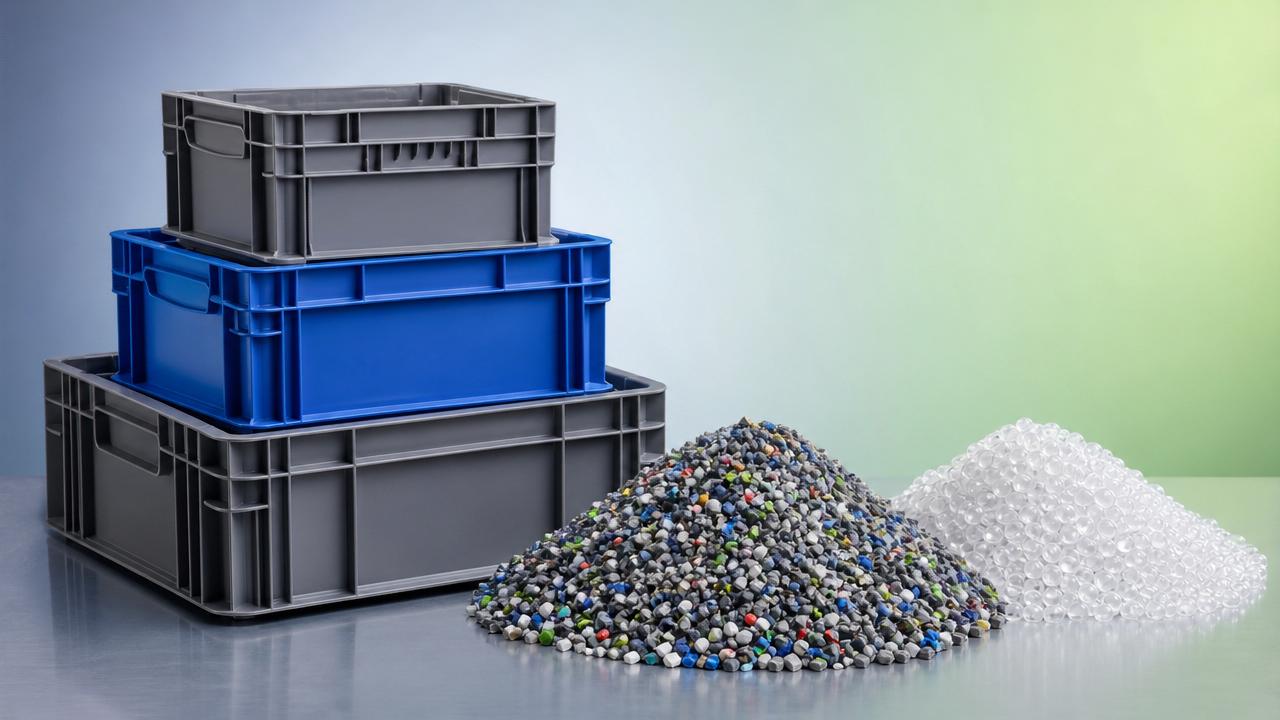
Recycled content is becoming a major factor behind changes in plastic box price, especially for buyers comparing cost, durability, and sustainability. In the rubber and plastics industry, understanding how recycled materials affect manufacturing, quality, and supply can help researchers make smarter decisions. This article explores why recycled inputs can shift pricing and what that means for sourcing plastic boxes.
For information researchers, price is rarely just a number. A lower quotation may reflect higher recycled resin content, wider material tolerance, or changing feedstock availability. A higher quotation may indicate tighter quality control, food-contact grade resin, or a more stable blend ratio. In practical B2B sourcing, these differences can affect service life, stacking performance, cleaning frequency, and replacement cycles over 3–5 years.
How Recycled Resin Influences Plastic Box Price
The first reason recycled content changes plastic box price is raw material cost movement. Virgin HDPE and PP usually follow petrochemical pricing, while recycled pellets depend on collection rates, sorting quality, contamination levels, and local processing capacity. In some quarters, recycled material can be 10%–30% cheaper than virgin resin. In other periods, shortages in high-grade recycled feedstock can narrow the gap or even reverse it.
Material Grade and Yield Loss
Not all recycled resin performs the same. Post-industrial recycled content is often more consistent than post-consumer material, which can reduce color variation and processing instability. If a manufacturer faces a 2%–5% higher scrap rate during molding, that waste cost can be built into the final plastic box price. This is one reason two boxes with similar dimensions may be quoted differently.
Processing Variables That Affect Cost
- Sorting and washing steps can add 1–3 extra production stages.
- Moisture control and impurity removal increase energy and inspection time.
- Color consistency may require additional masterbatch or blending.
- Mechanical performance testing may be needed batch by batch.
The table below shows how common recycled material factors can shift quotation logic in plastic product sourcing.
For many buyers, the most practical option is not the cheapest formulation but the most stable one. A consistent blend can control total ownership cost better than a low initial plastic box price that leads to earlier cracking, warping, or replacement.
Why Price Research Must Go Beyond Resin Cost
Researchers in rubber and plastics procurement should compare at least 4 dimensions: material composition, load requirement, application environment, and expected lifespan. In warehouse use, a box exposed to chemicals, moisture, or cold storage at 0°C to 5°C may need a different resin balance than one used in dry indoor turnover.
Application Conditions Change Value
Shanghai Ximin Industrial Development Co., Ltd. manufactures a wide range of plastic products, including plastic pallets, turnover boxes and baskets, trash cans, water tanks, hollow boards, and labor protection supplies. This broad product scope matters because packaging and handling systems are often evaluated together. A buyer reviewing plastic box price may also need to compare pallet compatibility, stacking safety, and cleaning efficiency across the logistics chain.
For example, cold chain logistics and chemical warehousing usually place more emphasis on low water absorption, resistance to moisture absorption, and easy cleaning. In such environments, supporting equipment like Logistics rack warehouse can stack large plastic pallets can influence the full cost picture. With HDPE or PP options, a 20kg pallet weight, 3–5 year lifespan, and configurations such as Euro Pallet, 4Way, and Double Faced, buyers can evaluate whether stable cargo support and moisture-proof performance reduce handling losses.
Common Research Questions
- Is the quoted plastic box price based on virgin resin, recycled resin, or a blend?
- What is the expected service cycle: 12 months, 24 months, or 36+ months?
- Will the box be used for food-adjacent, chemical, or export warehouse operations?
- Does the supplier control dimensional consistency and stacking safety?
The next table can help researchers compare sourcing priorities more accurately.
This comparison shows that plastic box price should be studied as part of a system cost, not only a unit cost. When turnover boxes work together with compatible pallets and warehouse flows, lower maintenance frequency and reduced deformation may offset a slightly higher purchase price.
How to Evaluate Recycled Content Without Missing Quality Risks
A careful sourcing review usually takes 3 steps. First, define the load and environment. Second, request material and production details. Third, compare lifecycle cost, not only initial quotation. In many B2B projects, this process helps filter out low-price offers that carry hidden replacement or handling risks.
Practical Screening Checklist
- Check whether the box must resist impact, moisture, or chemical splashes.
- Ask if the recycled input is post-industrial or post-consumer.
- Confirm if the supplier can keep batch variation within a controlled range.
- Review expected replacement frequency over 1–3 years.
- Compare cleaning and maintenance workload across 2–4 operating scenarios.
A Balanced View for Researchers
Recycled material does not automatically mean poor performance, and virgin material does not automatically mean best value. The key issue is suitability. In some logistics and warehousing applications, a recycled-content solution can deliver acceptable durability at a more competitive plastic box price. In more demanding uses, a controlled blend or higher-grade resin may be the safer choice.
If you are evaluating plastic boxes, pallets, or related handling products for cold chain, warehouse, or industrial turnover use, working with an experienced manufacturer can simplify the comparison process. Shanghai Ximin Industrial Development Co., Ltd. supports sourcing across plastic pallets, turnover boxes, waste containers, and related plastic products, helping buyers align price with application reality. To review specifications, compare material options, or discuss a tailored solution, contact us today to get product details and practical sourcing advice.
Related Posts
- Stackable Large Pallet Load Ratings That Are Easy to Misread
- Why Recycled Content Can Shift the Plastic Box Price
- Plastic Box Price and MOQ: Why Small Batches Cost More
- Stackable Large Pallet Features That Reduce Damage in Transit
- How to Read a Wooden Pallet Quotation for Load Capacity Clues
- Why Fast Delivery Requests Raise a Wooden Pallet Quotation
Products
Message

Leave a message
Have any questions or requests? Please leave a message and we will get back to you as soon as possible.