


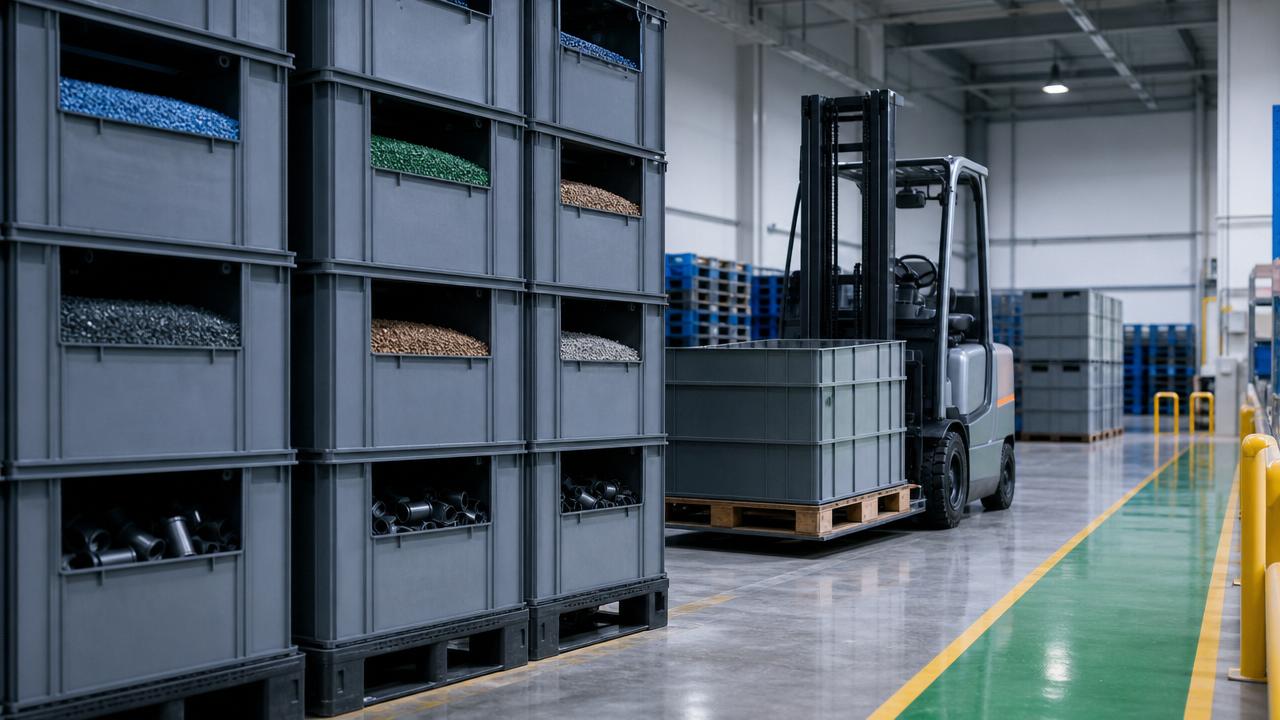
Safe daily material handling starts with the right habits and the right equipment. When using an industrial crate in rubber and plastic production or storage areas, operators must follow clear handling rules to reduce product damage, prevent workplace injuries, and improve workflow efficiency. This guide outlines practical safety points that help users handle crates correctly during lifting, stacking, transport, and routine operations.
Most users searching for industrial crate handling rules want practical safety guidance they can apply immediately on the floor. They are usually concerned with avoiding injuries, preventing crate failures, protecting goods, and keeping operations moving without delays.
For operators, the biggest risks are usually not complicated. They come from overloading, unstable stacking, poor lifting posture, damaged containers, blocked travel paths, and using the wrong crate for the job. Good rules focus on these everyday problems first.
Why Safe Industrial Crate Handling Matters in Rubber and Plastic Operations
In rubber and plastic facilities, crates often carry pellets, molded parts, components, tools, scrap, or finished goods. That means one industrial crate may be moved many times each day by hand, pallet jack, or forklift.
Frequent handling increases exposure to common accidents. Hands can be pinched during stacking, feet can be hit by dropped loads, and back strain can happen when workers lift awkward containers without checking weight or grip points first.
Unsafe crate handling also affects product quality. Cracked bins, unstable loads, or poor stacking can deform plastic parts, contaminate materials, or spill items into production areas. Small mistakes create cleanup work, delays, and unnecessary replacement costs.
The safest daily operations usually come from simple standards: inspect before use, match crate type to load, lift correctly, stack within limits, move carefully, and report damage early. These habits protect both workers and materials.
What Operators Should Check Before Using an Industrial Crate
Before lifting or moving any industrial crate, inspect it visually. Look for cracks, bent edges, broken handles, sharp burrs, loose components, or signs of impact damage. A damaged crate should never be used just because it still “looks usable.”
Next, confirm the crate is suitable for the material inside. Heavy resin bags, dense rubber parts, and metal inserts may exceed the working load of a light container. Oversized goods can also shift during movement and make the crate unstable.
Check whether the bottom surface is flat and intact. If the base is warped or uneven, the crate may wobble on floors, conveyors, or stacked layers. This raises the risk of tipping, especially when the crate is lifted or pushed around corners.
Also verify cleanliness. In rubber and plastic production, contamination matters. Oil, water, dust, or leftover scraps inside a crate can affect product quality and create slip hazards for operators who are loading or unloading by hand.
How to Lift and Carry Crates Without Causing Injuries
Manual lifting should begin with one question: is the crate light enough to carry safely? If the load is too heavy, too large, or hard to grip, use a pallet jack, trolley, forklift, or ask for team lifting support.
When lifting by hand, stand close to the crate, keep your feet stable, bend at the knees, and keep your back in a neutral position. Hold the crate firmly using the designed handholds, then lift smoothly without sudden twisting.
Do not carry a crate that blocks your forward view. If visibility is poor, split the load, use mechanical assistance, or ask a coworker to guide the path. Many daily collisions happen because operators try to save time.
Set the crate down with control. Dropping it from even a short height can damage the base, crack side walls, or scatter contents. Repeated impact shortens service life and increases the chance of failure during later handling.
Safe Stacking Rules That Prevent Collapse and Product Damage
Stacking is one of the most common causes of crate-related incidents. A stack may look stable at first but fail when the floor vibrates, when a forklift passes nearby, or when one weak container sits at the bottom.
Always follow the stack height recommended for the specific crate type and load. Do not assume all containers can be stacked the same way. Material weight, sidewall strength, and base design all affect safe stacking performance.
Place heavier items at the bottom and lighter items above. Make sure each industrial crate sits fully on the one below it, without overhang. Misalignment creates point loading, which can lead to cracking or sudden tilting.
Never stack damaged crates with good ones. A cracked corner or weak rim may fail under pressure. If a stack leans, stop and rebuild it immediately instead of trying to “watch it later.” Unsafe stacks should never remain in active aisles.
Rules for Moving Crates by Pallet Jack or Forklift
Mechanical handling reduces manual strain, but it introduces different hazards. Operators must make sure the load is centered, balanced, and secure before moving. If contents can shift, use wrapping, lids, or secondary containment where needed.
Forklift forks should enter fully beneath the supported load platform when required. Avoid striking the crate walls directly with forks. Impact can crack plastic containers, split wood supports, or damage the goods stored inside.
Travel at controlled speed, especially on turns, ramps, and uneven floors. Sudden braking or quick directional changes can throw stacked crates off balance. The safest move is usually the smoothest and most predictable one.
Where operations involve pallets as the base for crate transport, choose a platform suited to the load and environment. In some warehousing and logistics applications, Wooden Pallets Stackable Long Epal Wood Pallet Making Wood Chip Pallet Wooden pallets & boxes can support collection, stacking, and transportation tasks efficiently.
How to Organize Work Areas for Safer Daily Crate Handling
Even a strong crate becomes unsafe in a poorly organized area. Keep aisles clear, floors dry, and storage zones marked. Operators should know exactly where empty crates, full crates, scrap bins, and return containers belong.
Separate pedestrian routes from forklift traffic whenever possible. If workers must cross equipment paths, use visible markings and standard crossing rules. A safe handling system depends not only on the container, but also on the environment around it.
Do not leave crates in front of exits, fire equipment, or machine access points. Temporary placement often becomes a repeated habit. Good housekeeping prevents trips, reduces confusion, and makes daily material flow easier to control.
It also helps to standardize crate sizes for specific tasks. When workers know which crate belongs to which product, they make fewer loading mistakes and can stack, move, and store materials more safely and efficiently.
When to Repair, Remove, or Replace a Crate
Operators should never guess whether a damaged crate is still acceptable. If a container has visible structural damage, sharp edges, or poor stability, remove it from service at once and follow site reporting procedures.
Warning signs include deep cracks, broken corners, weakened handles, punctures, severe warping, and base damage. Labels that are missing or unreadable can also create handling mistakes, especially where crates carry different grades of materials.
Some sites use color tags or designated zones for damaged returnables. This is a smart practice because it prevents accidental reuse. Quick isolation of unsafe crates lowers injury risk and helps maintenance or purchasing teams respond faster.
For operations that combine crates with pallets, users may also evaluate different support options based on load type, cost, and reuse patterns. Products such as Wooden Pallets Stackable Long Epal Wood Pallet Making Wood Chip Pallet Wooden pallets & boxes may be considered where affordable, customizable, and recyclable load bases are needed.
Simple Daily Rules Operators Can Remember
If you want a practical routine, remember this sequence: check the crate, check the load, check the path, lift correctly, move slowly, stack evenly, and report damage immediately. These basics prevent most avoidable daily handling problems.
Supervisors can reinforce these habits with short toolbox talks, floor markings, and visual inspection standards. Operators do better when rules are simple, repeated, and directly connected to the tasks they perform every day.
Safe industrial crate handling is not about slowing work down. It is about reducing rework, preventing incidents, and helping materials move through production and storage without waste. The right habits save time because they avoid interruptions.
In rubber and plastic environments, daily safety depends on consistency. When operators use the right crate, follow load limits, and handle every move with control, they protect themselves, their coworkers, and the products the business depends on.
Related Posts
- Industrial Crate Handling Rules for Safer Daily Operations
- 2026 Industrial Crate Demand and Margin Outlook
- 2026 Durable Euro Plastic Pallet Supply and Lead Time News
- How Plastic Box Ventilation Changes Product Protection
- How to Judge Load Safety in a Heavy Duty Large Pallet
- What Affects Heavy Duty Large Pallet Service Life Most
Products
Message

Leave a message
Have any questions or requests? Please leave a message and we will get back to you as soon as possible.