


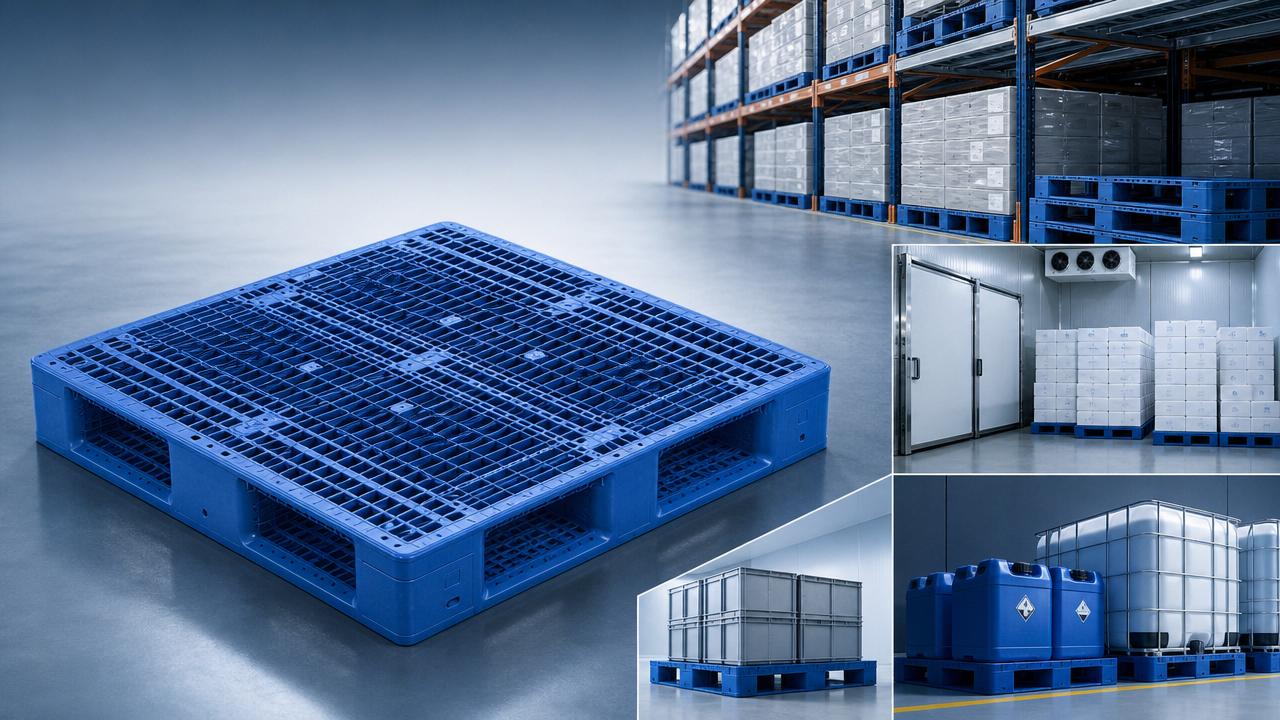
For after-sales maintenance teams, the service life of a heavy duty large pallet directly affects handling safety, replacement costs, and warehouse efficiency. From resin quality and structural design to loading habits and storage climate, every detail changes how long a pallet stays reliable. A clear checklist helps reduce breakage, avoid hidden fatigue, and keep logistics flow stable.
Why a Checklist Matters for Heavy Duty Large Pallet Life
A heavy duty large pallet often fails from cumulative stress, not one single event. Small impacts, overload, UV exposure, and poor stacking slowly weaken plastic ribs and deck surfaces.
In the rubber and plastics field, service life should be judged through material behavior, load paths, environmental exposure, and maintenance records. A checklist makes these factors measurable and repeatable.
Core Checklist: What Affects Heavy Duty Large Pallet Service Life Most
- Check resin grade first. Virgin or high-quality HDPE and PP usually deliver better impact resistance, dimensional stability, and crack resistance than poorly controlled recycled blends.
- Match rated load to actual use. Static load, dynamic load, and racking load differ greatly, and misuse quickly shortens heavy duty large pallet service life.
- Inspect structural design. Reinforced ribs, balanced deck geometry, and reversible double-sided layouts distribute force better and reduce local stress concentration.
- Review forklift entry practices. Off-center fork insertion, sudden lifting, and scraping under the pallet often damage entry points before the deck shows visible wear.
- Control impact events. Drops from docks, collisions with rack legs, and dragging across rough floors create micro-cracks that later become full structural failures.
- Monitor temperature range. Low temperatures can increase brittleness, while high heat may soften plastic and raise creep risk under long-term heavy loads.
- Limit UV exposure. Outdoor storage without stabilization can age polymer surfaces, causing fading, embrittlement, and lower impact performance over time.
- Keep loads evenly distributed. Point loading from narrow bases, drums, or metal edges can deform the deck and reduce the working life of a heavy duty large pallet.
- Clean chemical residues quickly. Oils, solvents, and corrosive chemicals may not destroy every pallet immediately, but long contact can affect performance and hygiene.
- Record inspection findings. Tracking cracks, deflection, repairs, and usage cycles helps identify pallets nearing retirement before a handling accident occurs.
Material and Design Factors That Deserve Extra Attention
Material quality remains the strongest predictor of heavy duty large pallet durability. HDPE is widely valued for impact strength and moisture resistance. PP can perform well where stiffness matters, but formulation control is critical.
Design also matters as much as resin. A reversible pallet can spread wear across both faces. Perforated grid decks reduce moisture retention and support drainage in wet environments.
One practical example is 4-way perforated grid reversible double sided reversible custom plastic pallets. Model 1210SW-B uses HDPE or PP, weighs 20.5kg, and fits cold chain and chemical logistics where moisture resistance and four-way entry improve daily handling.
Application Notes by Operating Scenario
Cold Chain Warehousing
In cold rooms, a heavy duty large pallet faces repeated low-temperature shocks. If pallets move directly between ambient docks and frozen storage, thermal cycling can accelerate brittleness.
Use pallets with stable resin properties, moisture-resistant surfaces, and predictable fork handling performance. Also reduce impact loading because cold plastic tolerates abuse less effectively.
Chemical Logistics
Chemical handling places more stress on compatibility than appearance. Residues can sit in deck openings, and spill exposure may combine with high loads or outdoor storage.
Select a heavy duty large pallet with easy-clean geometry and verify resistance to the chemicals involved. Perforated and reversible structures can also improve drainage and wear balance.
Commonly Ignored Risks
Ignoring rack deflection is a frequent mistake. A pallet that looks fine on the floor may sag dangerously when spanning rack beams under dynamic warehouse conditions.
Mixing pallet types in one loop creates uneven performance. Different deck heights, stiffness levels, and fork clearances can lead to repeated handling errors and faster wear.
Delaying removal after minor cracking increases risk sharply. Once one rib fails, neighboring ribs absorb extra stress, and service life can collapse faster than expected.
Choosing only by purchase price often raises total cost. A low-cost heavy duty large pallet may require more replacements, more downtime, and more safety intervention.
Practical Execution Steps
- Label pallets by load class and usage area, then separate cold chain, chemical, rack, and floor-storage units to reduce wrong application.
- Set weekly checks for fork entry damage, deck cracks, warpage, and edge wear, then document results in a simple lifecycle log.
- Train operators to insert forks fully, lift smoothly, avoid one-sided entry, and never drag a loaded pallet across concrete.
- Review suppliers for molding consistency, OEM or ODM support, and response speed when replacement or technical advice is needed.
Suppliers with in-house production, new material development capability, and broad export experience often provide more stable quality control over the full pallet lifecycle.
Conclusion and Next Action
The service life of a heavy duty large pallet depends most on material quality, structural design, correct load use, environmental exposure, and disciplined inspection. None of these factors works alone.
Start with a load and environment audit, compare it against current pallet specifications, and retire damaged units early. That simple process extends pallet life, improves safety, and reduces long-term logistics cost.
Related Posts
- What Affects Heavy Duty Large Pallet Service Life Most
- Nestable Large Pallet Handling Tips for Daily Warehouse Use
- Nestable Large Pallet Cost Benefits Beyond Floor Space
- What to Check Before Ordering a Nestable Large Pallet
- Where Wooden Pallet Price Pressure Is Hitting Distributors
- Can Wooden Pallet Price Predict Maintenance Costs Later
Products
Message

Leave a message
Have any questions or requests? Please leave a message and we will get back to you as soon as possible.