


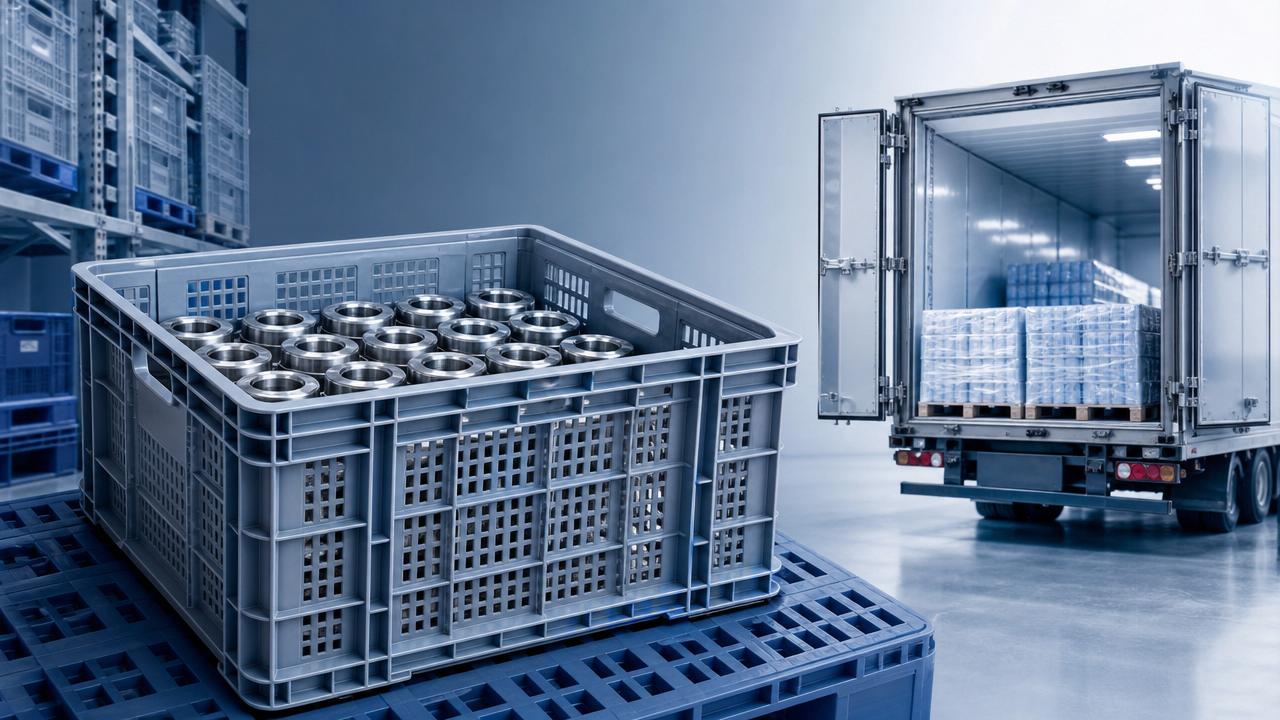
For technical evaluators, ventilation design in a plastic box directly affects moisture control, airflow stability, contamination risk, and overall product integrity during storage and transport. Understanding how vented structures improve protection while maintaining strength can help teams choose packaging solutions that better match application requirements, operational conditions, and long-term performance expectations.
Why does ventilation matter in a plastic box?
In rubber and plastics applications, a plastic box is not just a container. It is part of the protection system. Ventilation changes how heat, humidity, dust exposure, and condensation behave around the stored product.
For technical evaluation teams, this matters when products are sensitive to trapped moisture, unstable temperatures, or odor buildup. A closed-wall design may look safer, but in many operating conditions it can increase hidden risk.
Main protection effects of vented design
- Reduces condensation by allowing air exchange during cold-to-warm transitions.
- Improves drying speed after washing, sanitation, or outdoor handling.
- Helps maintain more stable internal conditions for produce, components, and semi-finished goods.
- Lowers the chance of mold, surface moisture, and packaging-related contamination.
Which product risks can ventilation reduce during storage and transport?
When a plastic box moves through warehouses, loading bays, vehicles, and refrigerated rooms, air conditions can change quickly. That transition often creates the exact environment where product damage begins.
Technical evaluators usually review compression strength, stacking, and dimensions first. However, ventilation pattern, opening ratio, and wall geometry often decide whether a box truly protects the load over time.
The table below shows how a vented plastic box influences common protection risks in practical logistics and industrial handling scenarios.
This does not mean every vented plastic box is better. The geometry must fit the product. If openings are too large, the load may lose support or become more exposed to particulates. Evaluation should focus on the balance between airflow and barrier function.
How should technical evaluators compare vented and non-vented options?
The right choice depends on product sensitivity, transport route, sanitation frequency, and stacking method. In rubber and plastics supply chains, the best plastic box is often the one that solves a specific operational problem rather than offering the most features.
Key comparison points
- Moisture profile: Are goods exposed to washdown, humidity, refrigeration, or outdoor transfer?
- Surface protection: Does the product need shielding from dust, fragments, or splash contact?
- Structural demand: Will the box be stacked heavily, racked, or moved repeatedly by automated systems?
- Cleaning cycle: Does the site require frequent washing and quick return to service?
To simplify evaluation, the following comparison table highlights decision criteria often used in packaging reviews and industrial procurement discussions.
For many industrial users, the decision is not box versus no box. It is vent pattern versus product sensitivity. That is why testing under actual storage and transport conditions is more useful than making decisions from appearance alone.
Which application scenarios benefit most from a vented plastic box?
A vented plastic box is often preferred where moisture, rapid temperature change, and repeat cleaning are part of daily operations. This is common across cold chain handling, component movement, agricultural supply, and chemical-adjacent storage processes.
Typical fit-for-use scenarios
- Cold chain logistics, where condensation control and airflow are more important than fully sealed walls.
- Reusable transport loops that require fast cleaning and turnaround between shipments.
- Warehouses with variable humidity, where retained water can affect labels, parts, or packaging surfaces.
- Operations that combine boxes with pallets, stretch wrap, or liners to create layered protection.
In many distribution systems, the box should also be evaluated together with the pallet. Stable support from below reduces load shift, while vented walls manage side airflow. For example, operations involving cold chain logistics or chemical storage may pair turnover boxes with a robust pallet platform such as 120*100 durable and strong heavy duty hard reversible export plastic pallet.
That pallet configuration includes HDPE/PP material options, 120x100 sizing, 4 Way entry, Double Faced structure, and moisture resistance. For evaluators, this matters because product protection is rarely decided by a single plastic box alone. It is shaped by the combined behavior of box, pallet, cleaning routine, and handling method.
What technical details should be checked before purchase?
Technical evaluators need more than general claims. Ventilation performance should be reviewed through measurable design details that affect durability and product safety in actual use.
Evaluation checklist for a plastic box
- Opening layout: Check whether side and base vents support airflow without weakening the load-bearing zones.
- Wall thickness and rib design: Confirm that strength compensation exists where vents reduce surface area.
- Material grade: HDPE and PP can each fit different impact, temperature, and stiffness requirements.
- Cleaning compatibility: Review whether geometry supports full wash access and water discharge.
- Stacking interface: Verify how the box behaves when loaded, nested, or placed on pallets in repeated cycles.
Shanghai Ximin Industrial Development Co., Ltd. supports this type of evaluation through a broad product range covering plastic pallets, iron pallets, wooden pallets, molded pallets, plastic turnover boxes, baskets, trash cans, water tanks, hollow boards, boxes, and related industrial supplies. This wider manufacturing perspective helps teams compare the plastic box not as a standalone item, but as part of a complete handling and storage system.
How can buyers balance protection, cost, and long-term maintenance?
A cheaper box can become more expensive if retained moisture increases spoilage, cleaning time, or product rejection. On the other hand, a heavily vented design may be unnecessary if the load requires stronger external shielding.
The best procurement decision usually comes from total operating cost rather than piece price. That includes replacement frequency, sanitation labor, drying time, transport damage, and compatibility with pallets and automated handling.
When comparing transport systems, it is also useful to assess pallet durability. A related example is the second-level load support solution used in export and warehouse operations: the 1411 grid Chuanzi model with 21kg weight, 3-5 years service life, and features such as stable cargo support and easy cleaning. In practical terms, these characteristics can reduce maintenance intervention across the full packaging loop.
FAQ: common questions about plastic box ventilation
Does a vented plastic box always protect better than a sealed one?
No. It protects better in moisture-sensitive, washdown, or temperature-shifting environments. If the product needs stronger dust isolation or very fine particle protection, a solid-wall design or additional liner may be more suitable.
What should evaluators test before approving a plastic box?
Review airflow effect, drying speed, stacking stability, cleaning access, and material performance under the actual operating temperature. Short route trials can reveal condensation or handling issues that catalog data does not show clearly.
Are vented boxes suitable for cold chain logistics?
Often yes. They can reduce condensation and improve temperature equalization. However, vent size, load configuration, and pallet support must be matched to the specific cold chain process.
What is a common mistake in plastic box selection?
A common mistake is focusing only on dimensions and unit price. Technical teams should also check moisture behavior, cleaning cycle time, structural ribs, and how the box performs with palletized loads and repeated transport.
Why choose us for technical evaluation and packaging matching?
For buyers and technical evaluators in the rubber and plastics sector, product protection depends on more than selecting a single plastic box. It requires matching box structure, pallet support, material choice, sanitation needs, and transport conditions into one workable system.
Shanghai Ximin Industrial Development Co., Ltd. offers manufacturing and supply experience across plastic pallets, turnover boxes, baskets, trash cans, water tanks, hollow boards, and other industrial plastic products. This allows more practical discussions around application fit, OEM and ODM needs, maintenance expectations, and cross-product compatibility.
You can contact us for specific support on parameter confirmation, plastic box selection, vented versus solid-wall comparison, pallet matching, delivery lead time, sample arrangements, custom solution discussion, and quotation planning. If your team is reviewing storage protection in cold chain, chemical handling, or reusable logistics, a targeted technical conversation can reduce selection risk before volume purchase.
Related Posts
- 2026 Industrial Crate Demand and Margin Outlook
- How Plastic Box Ventilation Changes Product Protection
- How to Judge Load Safety in a Heavy Duty Large Pallet
- What Affects Heavy Duty Large Pallet Service Life Most
- Nestable Large Pallet Handling Tips for Daily Warehouse Use
- Nestable Large Pallet Cost Benefits Beyond Floor Space
Products
Message

Leave a message
Have any questions or requests? Please leave a message and we will get back to you as soon as possible.