


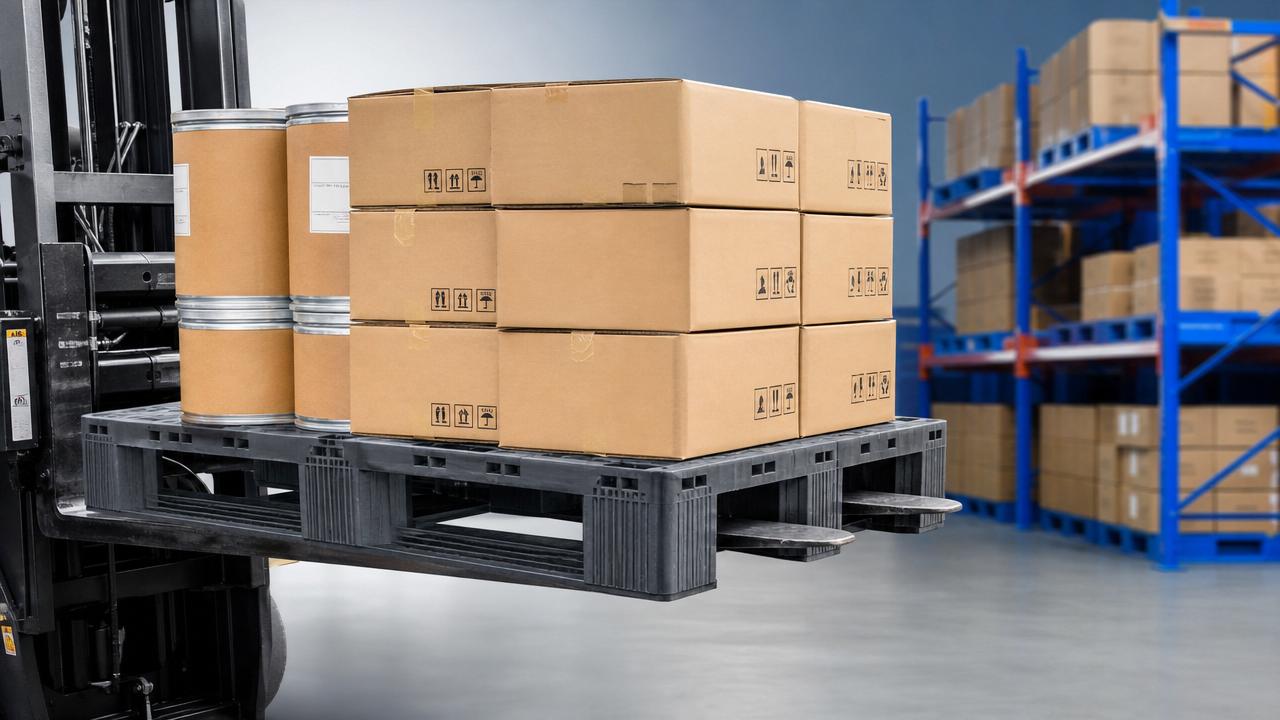
For quality control and safety managers, judging load safety in a heavy duty large pallet is critical to preventing product damage, warehouse accidents, and costly handling failures. From material strength and structural design to static and dynamic load performance, every detail affects reliability. This guide explains the key evaluation points to help you choose safer, more durable pallet solutions for demanding industrial applications.
What Is the Core Question Behind Load Safety?
When buyers search for heavy duty large pallet load safety, they usually want one practical answer: will this pallet carry the real load without bending, cracking, collapsing, or causing handling risks?
For quality control and safety managers, the issue is not only rated capacity on paper. The real concern is safe performance during storage, forklift movement, racking, and repeated use.
A pallet may look strong but still fail under uneven loading, impact, temperature change, or poor support conditions. That is why load safety must be judged as a complete operating system.
Why Rated Load Alone Is Not Enough
Many pallet failures happen because users rely on a single number from a datasheet. Static load, dynamic load, and racking load are different measurements and cannot be treated as interchangeable.
Static load refers to weight a pallet can support when resting on a flat floor. Dynamic load means safe capacity while lifted or moved. Racking load applies when supported on rack beams.
A heavy duty large pallet that safely holds several tons on the ground may perform far worse when handled by a forklift. Safety managers should always match the rating to the actual use case.
It is also important to ask how the load test was performed. Test methods, support points, load distribution, and cycle conditions all influence the final number presented by a supplier.
Start With Material Strength and Consistency
Material quality is one of the first indicators of pallet safety. In the rubber and plastics industry, plastic pallets are valued for consistent dimensions, moisture resistance, and predictable production quality.
However, not all plastics perform equally. Virgin material, recycled blends, reinforcement content, wall thickness, and molding quality can greatly change stiffness, impact resistance, and fatigue life.
Quality personnel should ask whether the pallet uses high-density polyethylene, polypropylene, or reinforced structures. They should also verify whether batch consistency is controlled across long production runs.
For comparison, some operations still use wood for specific handling needs. In mixed facilities, products such as Wood Pallet 1200*1000*162 Manufacturer of Wooden Pallets Industrial Wooden Pallet may be evaluated for affordability, customization, and heavy cargo support in selected scenarios.
No matter the material, visible surface quality matters. Warpage, sink marks, weak weld lines, cracks, exposed fasteners, or moisture damage may all indicate higher failure risk under load.
Check Structural Design, Not Just Raw Material
Even strong material cannot compensate for poor design. The structure of a heavy duty large pallet determines how force travels through the deck, legs, runners, and bottom supports.
Safety managers should inspect whether the pallet has a full perimeter base, three runners, or nine feet design. Each layout behaves differently during stacking, forklift entry, and racking.
Top deck design also matters. Rib density, support geometry, corner reinforcement, and anti-slip surfaces affect load stability. Better force distribution usually means lower deflection and reduced breakage risk.
Entry points for forklifts and pallet jacks should be smooth and reinforced. Repeated impact at fork entry areas is a common reason for hidden structural damage in large industrial pallets.
Attention to edge design is useful too. Features such as fillet anticollision design can reduce local impact damage during handling, especially in busy warehouses with frequent contact events.
How to Judge Static, Dynamic, and Racking Safety in Practice
The safest approach is to evaluate load performance under real operating conditions. A laboratory rating is a starting point, but warehouse conditions often introduce uneven support and shifting weight.
For static load, verify floor flatness, stacking height, and long-term creep behavior. Some pallets support heavy weight initially but slowly deform under continuous storage over days or weeks.
For dynamic load, observe lifting under the heaviest routine condition. Watch for deck flexing, fork-entry stress, twisting, and unstable cargo movement during transport across turns or uneven ground.
For racking load, confirm the beam spacing and the exact pallet orientation used in storage. Unsupported spans create bending stress, which is a major cause of mid-span cracking.
Whenever possible, test with the actual product weight and packaging footprint. Drums, bags, boxed goods, and irregular industrial parts create very different pressure patterns on the pallet deck.
Uneven Load Distribution Is a Hidden Safety Risk
One of the most overlooked issues is load distribution. Many pallets are rated assuming evenly spread weight, yet many factories place concentrated loads in small areas.
Machinery parts, metal components, liquid containers, and dense cartons can create point loading. This increases local stress and may cause the pallet to fail below its published capacity.
QC teams should assess whether goods cover the deck evenly or leave unsupported zones. If the center of gravity is off-balance, the pallet becomes more dangerous during lifting and turning.
Stretch wrap and unitization quality also influence safety. A stable pallet is not only about deck strength but also about whether the load remains centered and secured during movement.
What Inspection Points Matter Most Before Purchase or Use?
Before approving a heavy duty large pallet, create a checklist that combines visual inspection, dimensional control, load verification, and handling compatibility with your internal equipment.
First, confirm actual size tolerance. Pallets that vary too much in dimensions may jam conveyors, sit poorly on rack beams, or create unsafe forklift engagement in automated processes.
Second, inspect the underside structure and weight-bearing areas. These zones often reveal whether the design is truly intended for industrial heavy-duty service or only for light warehouse circulation.
Third, review the pallet’s service history if it is reused. Look for whitening stress marks, repaired cracks, loose components, deformation, and corner damage from repeated collisions.
Fourth, verify compatibility with your goods and your environment. Cold storage, outdoor UV exposure, chemical contact, and wet handling areas all place additional demands on pallet durability.
Ask Suppliers the Questions That Reveal Real Safety Performance
Good procurement decisions come from specific questions. Ask suppliers for tested static, dynamic, and racking capacities, and request the conditions under which each figure was obtained.
Ask whether the safety rating includes a recommended safety factor. In many industrial applications, the acceptable working load should remain below the maximum test result.
Request information on raw materials, reinforcement options, expected service life, and common failure modes. A reliable manufacturer should explain where the pallet performs best and where limits apply.
You should also ask about quality control consistency. A pallet design is only trustworthy if every production batch maintains the same wall thickness, dimensions, and structural integrity.
In operations that use multiple pallet materials, comparing alternatives can be valuable. For some warehousing and logistics needs, the Wood Pallet 1200*1000*162 Manufacturer of Wooden Pallets Industrial Wooden Pallet may be reviewed alongside plastic solutions based on cargo type, budget, and recycling preferences.
Build a Practical Internal Standard for Pallet Approval
To reduce handling incidents, companies should not rely only on supplier claims. Establish an internal approval process for any heavy duty large pallet before full-scale deployment.
This process can include sample inspection, trial loading, forklift handling tests, rack simulation, and damage review after repeated cycles. Real-world testing often reveals issues hidden in catalog data.
Create clear pass or fail criteria for deflection, visible cracking, instability, and dimensional drift. This helps QC and safety teams make objective decisions instead of relying on subjective impressions.
It is also wise to classify pallets by application. One model may be acceptable for floor storage but not for beam racking, export movement, or high-cycle distribution environments.
Conclusion: Safe Load Judgment Requires System Thinking
To judge load safety in a heavy duty large pallet, do not focus on a single capacity number. The real answer comes from material quality, structural design, load distribution, and handling conditions together.
For quality control and safety managers, the best decision method is simple: match pallet performance to the exact use environment, verify test conditions, inspect actual structure, and trial it under real loads.
When these steps are followed, pallet selection becomes safer, more economical, and easier to standardize. That reduces product damage, improves warehouse safety, and supports more reliable logistics performance over time.
Related Posts
- How to Judge Load Safety in a Heavy Duty Large Pallet
- What Affects Heavy Duty Large Pallet Service Life Most
- Nestable Large Pallet Handling Tips for Daily Warehouse Use
- Nestable Large Pallet Cost Benefits Beyond Floor Space
- What to Check Before Ordering a Nestable Large Pallet
- Where Wooden Pallet Price Pressure Is Hitting Distributors
Products
Message

Leave a message
Have any questions or requests? Please leave a message and we will get back to you as soon as possible.