


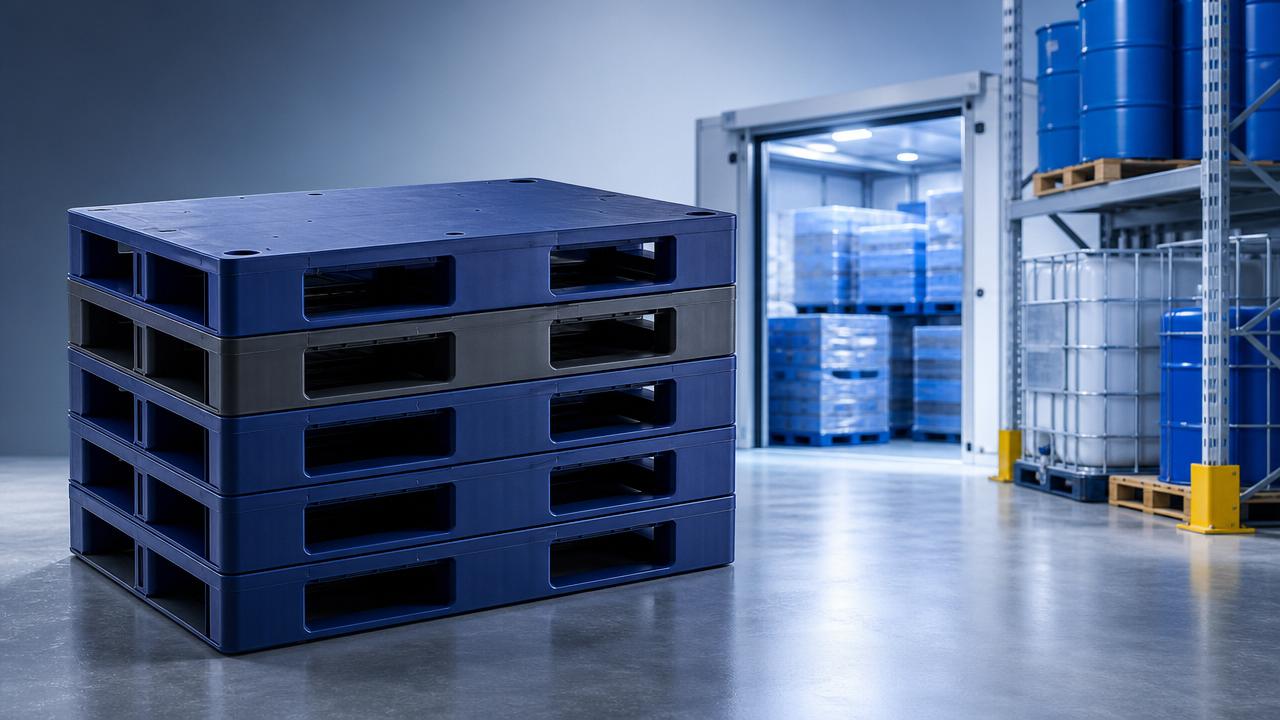
For after-sales maintenance teams, the real lifespan of a stackable large pallet depends on far more than its rated load. Material quality, stacking frequency, impact exposure, temperature changes, cleaning methods, and repair practices all play a direct role in long-term performance. Understanding these factors helps reduce replacement costs, improve safety, and keep pallet systems reliable across demanding industrial operations.
Why does a stackable large pallet fail earlier than expected?
Many maintenance teams assume a stackable large pallet reaches end of life only when it cracks. In practice, service life often declines much earlier through deck deformation, corner wear, fork entry damage, and loss of stacking stability. These issues affect throughput, safety, and return logistics.
In the rubber and plastics industry, pallets are exposed to repeated handling, shifting temperatures, moisture, detergents, and impact from forklifts. A pallet that performs well in light storage may age much faster in cold chain logistics or chemical warehousing, especially when loading patterns are inconsistent.
- Material fatigue builds up through repeated stacking and unstacking cycles.
- Forklift blade impacts gradually weaken entry points and lower deck integrity.
- Aggressive cleaning agents may accelerate surface stress or embrittlement.
- Improper outdoor storage can expose plastic to heat buildup and weathering.
The biggest lifespan drivers maintenance teams should track
For a stackable large pallet, the most useful maintenance approach is not guesswork. Teams should record damage by cause: impact, overload, chemical contact, racking misuse, or washdown stress. Once the failure mode is visible, replacement timing becomes easier to control.
The table below helps maintenance staff connect operating conditions with realistic wear patterns for a stackable large pallet.
A rated lifespan such as 3-5 years should be read as a practical range, not a guarantee for every site. Real performance depends on how closely actual conditions match the pallet’s material design and handling routine.
How material choice changes the real lifespan
Material selection is one of the most overlooked variables in stackable large pallet durability. HDPE is often chosen for good toughness and moisture resistance, while PP may suit certain load and structural needs. The right resin depends on environment, impact level, and temperature profile.
Why resin matters in maintenance planning
- HDPE is commonly preferred where washdown, humidity, and cold chain exposure are frequent.
- PP can be useful in applications requiring a balance of rigidity and production flexibility.
- Material consistency affects how evenly the pallet ages under repeated stacking loads.
For example, Heavy Large Plastic Pallet Stackable Durable Solid Deck Waterproof and Wear-Resistant Floor Plastic Tray is offered in HDPE and PP, with a solid deck, 4Way entry, Double Faced structure, and moisture-resistant, waterproof, and wear-resistant features. These traits are relevant for maintenance teams working in cold chain logistics and chemical warehousing.
Which operating scenarios are hardest on a stackable large pallet?
Different environments age pallets in different ways. After-sales maintenance personnel should avoid using one replacement rule for every warehouse. Scenario-based inspection reduces unnecessary scrapping and helps identify the right pallet structure for each process zone.
The table below compares common industrial scenarios where a stackable large pallet may show different wear behavior.
This comparison shows why the same stackable large pallet may last longer in one plant and much shorter in another. Environmental stress and handling discipline matter as much as nominal load capacity.
What should after-sales teams inspect first?
A practical inspection checklist
- Check the deck for permanent deflection, especially on Double Faced designs used in high stacking cycles.
- Inspect all 4Way entry points for splitting, gouging, or deformation from forklift contact.
- Review whether loads are centered or frequently offset, as uneven loading accelerates structural fatigue.
- Confirm cleaning methods. High-pressure washing, harsh chemicals, or heat exposure may not suit every resin.
- Separate cosmetic wear from structural damage so replacement decisions stay cost-effective.
Shanghai Ximin Industrial Development Co., Ltd. supports this kind of structured evaluation with a broad product range across plastic pallets, iron pallets, wooden pallets, molded pallets, and related plastic products. That matters when a maintenance team must compare alternatives instead of forcing one pallet design into every duty cycle.
How to choose between replacement, standardization, and lower maintenance cost
A common mistake is replacing damaged units one by one without reviewing the root cause. If damage repeats in the same area, the issue may be entry direction, floor condition, stacking height, or resin mismatch. Standardization often cuts cost more effectively than isolated replacement.
Procurement and maintenance decision points
- Match material to cleaning, humidity, and chemical contact conditions.
- Review whether Euro Pallet specifications fit existing conveyors, racks, and transport lanes.
- Ask whether the weight-to-duty balance is suitable; for some operations, an 8.2kg pallet may improve handling efficiency.
- Consider OEM and ODM support if the operation needs a custom deck, footprint, or color identification system.
Suppliers with in-house manufacturing and the ability to move from drawings or design concepts to finished products can help maintenance departments solve recurring field problems faster. This is especially useful when standard pallets do not fully match local handling equipment.
FAQ about stackable large pallet lifespan
How long should a stackable large pallet last in real use?
In many industrial settings, a practical service life range may be around 3-5 years, but only when use conditions are compatible with the pallet design. High-impact movement, chemical exposure, and poor stacking discipline can shorten that window significantly.
Is waterproof performance enough to guarantee long life?
No. Waterproof performance is important, but a stackable large pallet also needs resistance to wear, impact, and deformation. Moisture resistance helps in wet environments, yet most early failures come from mechanical damage rather than water alone.
When should maintenance teams replace instead of continue using a pallet?
Replace the pallet when cracks spread through structural areas, fork entries become unsafe, stacking becomes unstable, or deck deformation affects product support. Cosmetic scratching alone does not always justify replacement, but structural instability does.
What product features usually help reduce maintenance burden?
Maintenance teams often look for a solid deck, reliable 4Way entry, moisture-resistant surfaces, and wear-resistant material behavior. In demanding sites, a stackable large pallet with application-specific resin selection tends to reduce avoidable damage and cleaning difficulty.
Why choose us for pallet lifecycle support?
For after-sales maintenance personnel, the value of a supplier is not only the pallet itself but also the ability to clarify parameters, recommend the right structure, and respond quickly when field conditions change. Shanghai Ximin Industrial Development Co., Ltd. offers plastic pallets and related industrial plastic products with support for product selection, application matching, and custom development.
If you need help evaluating a stackable large pallet for cold chain logistics, chemical warehousing, or mixed warehouse circulation, you can consult on load conditions, material choice, entry type, delivery timing, sample support, and custom OEM or ODM requirements. For teams comparing replacement options, the second reference point worth reviewing is Heavy Large Plastic Pallet Stackable Durable Solid Deck Waterproof and Wear-Resistant Floor Plastic Tray, especially when low maintenance cost and stable stacking are priorities.
Related Posts
- When Does a Stackable Large Pallet Save More Floor Space?
- What Affects the Real Lifespan of a Stackable Large Pallet?
- Stackable Large Pallet Load Ratings That Are Easy to Misread
- Why Recycled Content Can Shift the Plastic Box Price
- Plastic Box Price and MOQ: Why Small Batches Cost More
- Stackable Large Pallet Features That Reduce Damage in Transit
Products
Message

Leave a message
Have any questions or requests? Please leave a message and we will get back to you as soon as possible.