


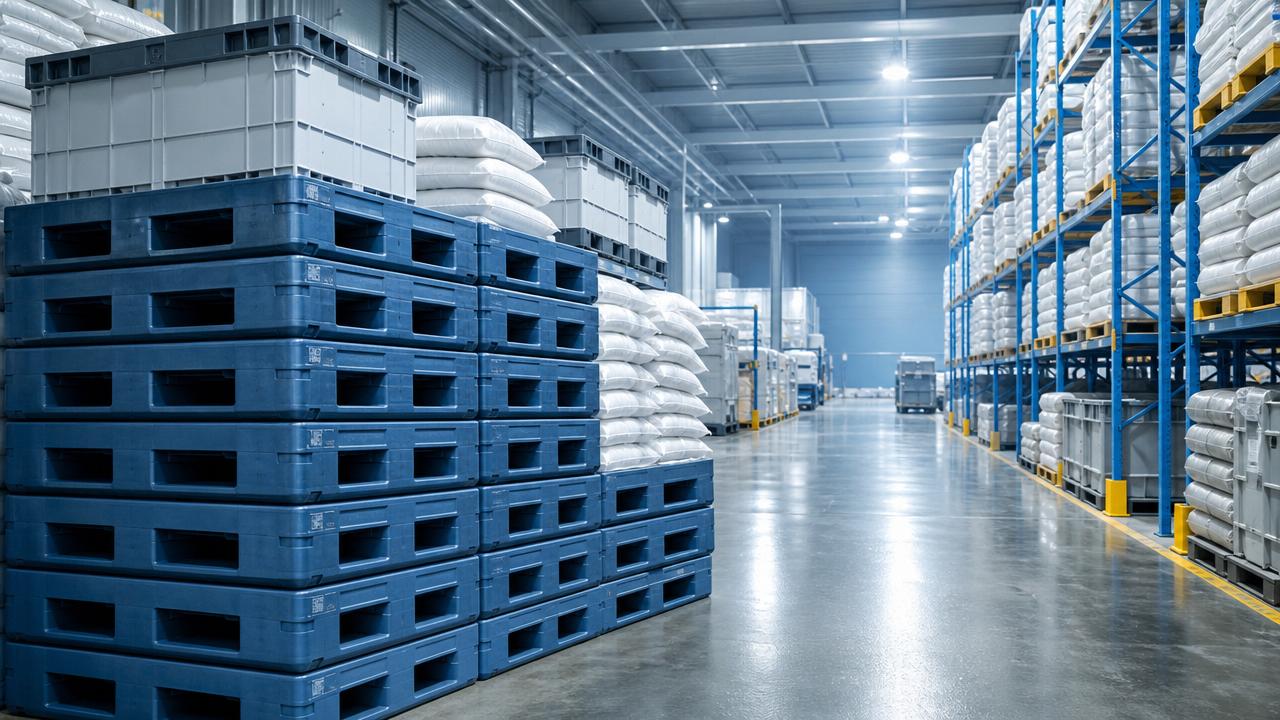
A stackable large pallet can be a smart way to recover valuable floor space, but the real savings depend on load type, stacking height, warehouse layout, and handling methods. For daily operations in the rubber and plastics industry, the key is knowing when stacking improves storage density and when it slows movement or raises risk.
What does a stackable large pallet really save?
A stackable large pallet saves floor space by using vertical volume instead of expanding storage lanes. The benefit appears when loads remain stable after stacking.
In rubber and plastics facilities, this often applies to bagged resin, closed containers, molded parts, and boxed accessories. These loads usually have repeatable dimensions.
If every pallet footprint stays the same, stacking can reduce the number of active floor positions needed. That means more open travel area and less overflow storage.
When does a stackable large pallet work best?
A stackable large pallet works best when products have uniform weight, rigid packaging, and predictable rotation. It is especially useful in seasonal stock buildup.
Cold chain logistics and chemical warehousing also benefit. Moisture resistance matters in these environments, where wooden pallets may absorb water and deform.
One practical option is Logistics rack warehouse can stack large plastic pallets. It uses HDPE or PP and supports stable stacking in wet storage conditions.
Useful signs that stacking will save space
- Loads have flat bottoms and stable centers of gravity.
- Forklift access remains clear after stacking.
- Inventory does not require constant picking from lower levels.
- Warehouse rules allow safe stack height limits.
When can a stackable large pallet fail to save space?
A stackable large pallet may not help when items are crushed easily, wrapped poorly, or vary in height. In such cases, vertical storage becomes unstable.
It also performs poorly when operators must access each pallet frequently. Rehandling upper units can erase the floor-space advantage.
Very narrow aisles can create another problem. A taller stack may fit the floor plan, yet reduce turning safety for forklifts.
How do you judge the right pallet design?
Start with load behavior, not only pallet size. A stackable large pallet should match packaging strength, humidity exposure, and handling frequency.
For example, the model 1208 large tablet with nine legs suits many warehouse layouts. Euro Pallet, 4Way, and Double Faced formats support flexible movement.
Plastic options often reduce maintenance. They show low water absorption, resist moisture uptake, help prevent mold, and remain easier to clean.
What cost and lifecycle factors matter?
Floor-space savings should be measured against damage risk, labor time, and pallet life. A cheaper pallet can cost more if stacks collapse or cleaning is difficult.
In many rubber and plastics applications, a 20kg pallet with a 3–5 year lifespan offers balanced durability. Long service life supports lower replacement frequency.
That is why some facilities choose Logistics rack warehouse can stack large plastic pallets for moisture-prone operations needing stable cargo support.
What are the most common mistakes?
- Assuming every stackable large pallet fits every load.
- Ignoring forklift clearance and turning height.
- Stacking soft bags or flexible cartons too high.
- Choosing materials without considering moisture and cleaning needs.
A stackable large pallet saves more floor space when loads are uniform, stack-safe, and slow-moving enough to avoid repeated rehandling. In rubber and plastics storage, moisture resistance and easy cleaning often make plastic pallets the more reliable choice. Review load shape, aisle width, stack height, and handling rhythm before deciding. That simple check will show whether stacking creates real space gains or only adds operational friction.
Related Posts
- When Does a Stackable Large Pallet Save More Floor Space?
- What Affects the Real Lifespan of a Stackable Large Pallet?
- Stackable Large Pallet Load Ratings That Are Easy to Misread
- Why Recycled Content Can Shift the Plastic Box Price
- Plastic Box Price and MOQ: Why Small Batches Cost More
- Stackable Large Pallet Features That Reduce Damage in Transit
Products
Message

Leave a message
Have any questions or requests? Please leave a message and we will get back to you as soon as possible.