


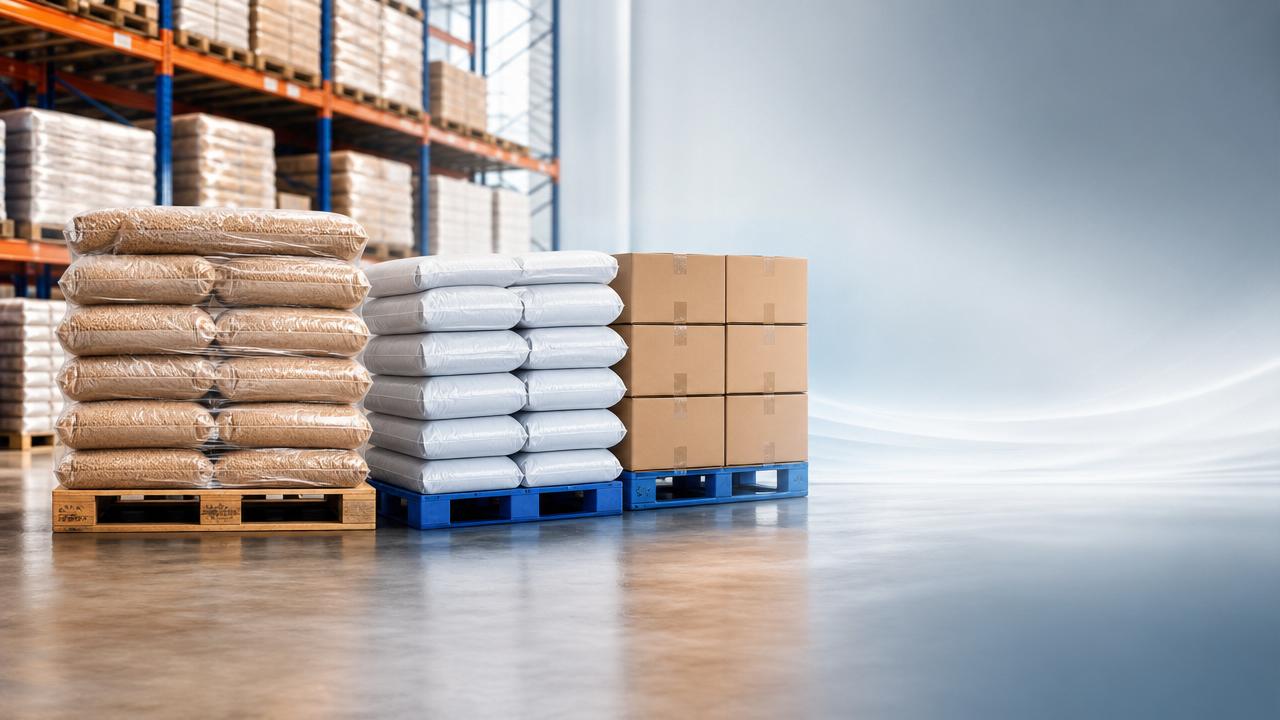
As businesses plan for 2026, the wooden pallet price is becoming a major planning variable across storage, shipping, and production networks.
Raw material inflation, labor shortages, freight volatility, and changing demand are reshaping cost expectations in a market long viewed as predictable.
For companies comparing wood with plastic alternatives, the wooden pallet price also affects packaging strategy, reuse cycles, and total logistics efficiency.
Why the wooden pallet price outlook for 2026 is turning upward
Recent market signals suggest the wooden pallet price will remain under pressure rather than returning to older baseline levels.
Sawmill capacity, timber harvesting rules, and weather-related supply interruptions continue to affect board availability in many regions.
At the same time, warehousing expansion and inventory diversification are increasing pallet consumption across food, chemicals, retail, and industrial goods.
This matters even in the rubber and plastics sector, where pallet choice influences contamination control, durability, and returnable packaging economics.
The main forces pushing wooden pallet price higher
Several connected factors explain why the wooden pallet price is expected to rise through 2026.
Raw materials remain the most visible cost trigger
Wood availability is still uneven across regions, especially where construction, biomass, and packaging compete for the same lumber resources.
When lower-grade timber becomes scarce, the wooden pallet price rises faster for standard sizes and export-ready units.
Energy and freight amplify every cost increase
Kiln drying, treatment, inland hauling, and short-distance delivery all depend on energy and fuel pricing.
Even modest transport changes can significantly alter the final wooden pallet price in destination markets.
How higher wooden pallet price affects packaging and logistics decisions
A rising wooden pallet price changes more than procurement budgets. It affects network design, cargo protection, and return logistics planning.
- Short one-way shipments may face higher packaging cost per trip.
- Export operations may reevaluate treated wood versus reusable plastic pallets.
- Automated warehouses may prioritize dimensional consistency over lowest unit price.
- Clean production areas may compare wood dust risks with plastic pallet hygiene benefits.
In rubber and plastics operations, pallet decisions often connect with moisture resistance, easy cleaning, and repeated handling performance.
That is why wooden pallet price trends increasingly drive interest in alternative load carriers with longer service life.
What the market is comparing beyond wooden pallet price alone
Buyers are no longer judging only the upfront wooden pallet price. Total ownership cost is becoming the stronger benchmark.
For some operations, hybrid sourcing works best: wood for low-cost one-way flow, plastic for internal circulation and clean warehouse loops.
A useful example is Wooden Pallets Stackable Long Epal Wood Pallet Making Wood Chip Pallet Wooden pallets & boxes.
Its EPAL-style format, 1200*1000*138 size, and stackable design fit logistics, warehousing, transport, and even secondary reuse applications.
Signals worth tracking before wooden pallet price moves again
The next phase of wooden pallet price movement will likely come from a combination of regional and global indicators.
- Softwood and hardwood benchmark changes
- Fuel and domestic trucking trends
- Construction market recovery affecting timber competition
- Port congestion and cross-border treatment requirements
- Warehouse automation growth demanding uniform pallets
If these indicators strengthen at the same time, the wooden pallet price could rise faster than many annual budgets currently assume.
How to respond to rising wooden pallet price in 2026
Practical preparation can reduce cost shocks and improve packaging resilience.
- Map pallet use by route, turnover frequency, and load type.
- Separate one-way export demand from closed-loop internal circulation.
- Compare unit price with lifespan, hygiene, and repair rates.
- Test alternative materials where cleanliness and durability are critical.
- Review standard sizes to reduce handling inefficiency and dead stock.
Wood still offers affordability, heavy-load support, recyclability, and customization, especially for broad logistics use.
However, rising wooden pallet price makes side-by-side comparison with plastic pallets increasingly necessary in modern distribution systems.
A clearer next step for cost control and pallet planning
The wooden pallet price in 2026 will be shaped by timber pressure, labor costs, transport shifts, and operational expectations.
A better decision comes from evaluating the full flow of goods, not just the cheapest pallet at purchase time.
Shanghai Ximin Industrial Development Co., Ltd. supplies plastic pallets, iron pallets, wooden pallets, molded pallets, and turnover boxes for varied logistics needs.
Review route conditions, hygiene demands, and reuse frequency now, then compare options before the wooden pallet price rises further.
Related Posts
- Wooden Pallet Price in 2026: What Is Driving the Increase
- Nestable Large Pallet or Rackable Type: Which Fits Better
- When a Heavy Duty Large Pallet Lowers Warehouse Damage Risk
- Heavy Duty Large Pallet Trends Shaping 2026 Material Handling
- When Does a Stackable Large Pallet Save More Floor Space?
- What Affects the Real Lifespan of a Stackable Large Pallet?
Products
Message

Leave a message
Have any questions or requests? Please leave a message and we will get back to you as soon as possible.