


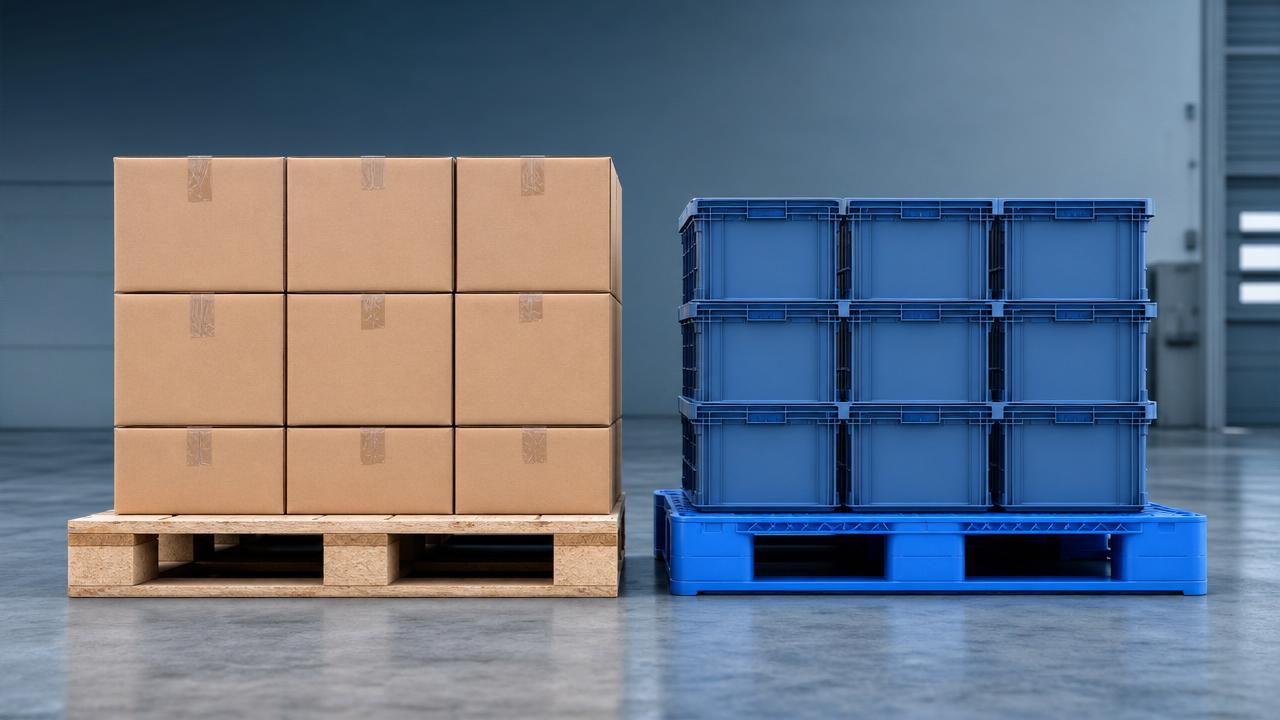
When comparing wooden pallet price with plastic alternatives, a simple unit quote rarely shows the full picture. Cost today is shaped by material price, breakage rate, cleaning needs, reuse cycles, and transport conditions. In logistics, warehousing, and manufacturing, the right pallet choice affects not only purchasing budgets, but also handling efficiency, hygiene control, and replacement frequency.
This article explains how wooden pallet price compares with plastic pallets in current market conditions. It also looks at where each option performs better, and how to estimate the real cost over time rather than at first purchase only.
Basic Cost Structure Behind Wooden and Plastic Pallets
The first difference is obvious: wooden pallet price is usually lower at the initial buying stage. Wood remains widely available, easy to repair, and familiar across global shipping systems.
Plastic pallets often cost more per piece upfront. That higher price comes from resin cost, molding technology, and stronger consistency in dimensions and load performance.
However, initial price alone can be misleading. A lower wooden pallet price may lead to higher total spending if pallets break often, absorb moisture, or require frequent replacement.
- Wooden pallets: lower purchase cost, higher variation, repairable
- Plastic pallets: higher purchase cost, longer service stability, easier sanitation
- Total cost depends on use frequency, environment, and damage rate
Current Market Signals Affecting Wooden Pallet Price
Current pallet costs are influenced by lumber supply, resin pricing, freight expenses, and environmental rules. This means wooden pallet price and plastic pallet pricing can shift quickly across regions.
So, which costs less now? In many short-cycle or one-way shipments, wooden pallet price still wins on entry cost. In closed-loop systems, plastic often becomes cheaper over repeated use.
Total Cost Over Time Matters More Than Unit Price
A practical comparison should include the full service period. That means counting replacement, cleaning, product loss, labor, and downtime caused by damaged pallets.
For example, a wood pallet may look attractive because of a low wooden pallet price. But if it lasts fewer cycles in wet storage, its cost per use increases quickly.
Plastic pallets are often preferred in cold chain logistics and chemical warehousing because moisture resistance and easy cleaning reduce operational risk. A good example is the 1000x1000x140mm European plastic pallet, designed for high-humidity environments.
Made from HDPE or PP, this model has a 2Way entry type, an 18kg weight, and a service life of about 3-5 years. Its moisture-proof performance and low maintenance costs make repeated use easier to control.
Typical Cost Elements to Compare
- Purchase price per pallet
- Expected number of trips or use cycles
- Cleaning and sanitation cost
- Breakage and product damage risk
- Storage conditions, especially humidity
- Compliance cost for export or sensitive industries
Application Value Across Different Operating Environments
The better choice depends on how pallets move through the business. Wooden pallet price should be judged against the operating environment, not in isolation.
In environments where cleanliness, dimensional consistency, and low maintenance matter, plastic pallets usually create stronger long-term value. This is especially true for molded and double faced designs used repeatedly.
Practical Evaluation Points Before Choosing
A decision should balance present cost and future performance. Reviewing only wooden pallet price can lead to underestimating real operating expenses.
- Estimate cost per trip, not only cost per pallet.
- Check humidity, washdown, or cold storage exposure.
- Measure breakage rates from current pallet use.
- Include compliance needs for exports or sensitive goods.
- Test a sample batch before large-volume conversion.
If long service life and stable support are required, a plastic option such as the 1010 Nine-legged tablet model may offer a more predictable operating cost. It is especially suitable where wet handling conditions are common.
Final Cost Perspective and Next Step
The answer to whether wooden pallet price or plastic costs less now depends on the use model. Wood is usually cheaper to buy first. Plastic is often cheaper to own over time.
For short-term transport and limited reuse, wood remains competitive. For moisture-prone operations, hygiene-sensitive flows, and repeated handling cycles, plastic pallets can reduce maintenance and replacement costs significantly.
A sound next step is to compare current damage rates, cleaning frequency, and annual replacement volume against a trial plastic pallet program. That approach gives a realistic basis for deciding beyond headline quotes alone.
Shanghai Ximin Industrial Development Co., Ltd. supplies plastic pallets, iron pallets, wooden pallets, molded pallets, turnover boxes, and related plastic products, with OEM and ODM support, in-house manufacturing, and fast response for custom project evaluation.
Related Posts
- Wooden Pallet Price vs Plastic: Which Costs Less Now
- Wooden Pallet Price in 2026: What Is Driving the Increase
- Nestable Large Pallet or Rackable Type: Which Fits Better
- When a Heavy Duty Large Pallet Lowers Warehouse Damage Risk
- Heavy Duty Large Pallet Trends Shaping 2026 Material Handling
- When Does a Stackable Large Pallet Save More Floor Space?
Products
Message

Leave a message
Have any questions or requests? Please leave a message and we will get back to you as soon as possible.