


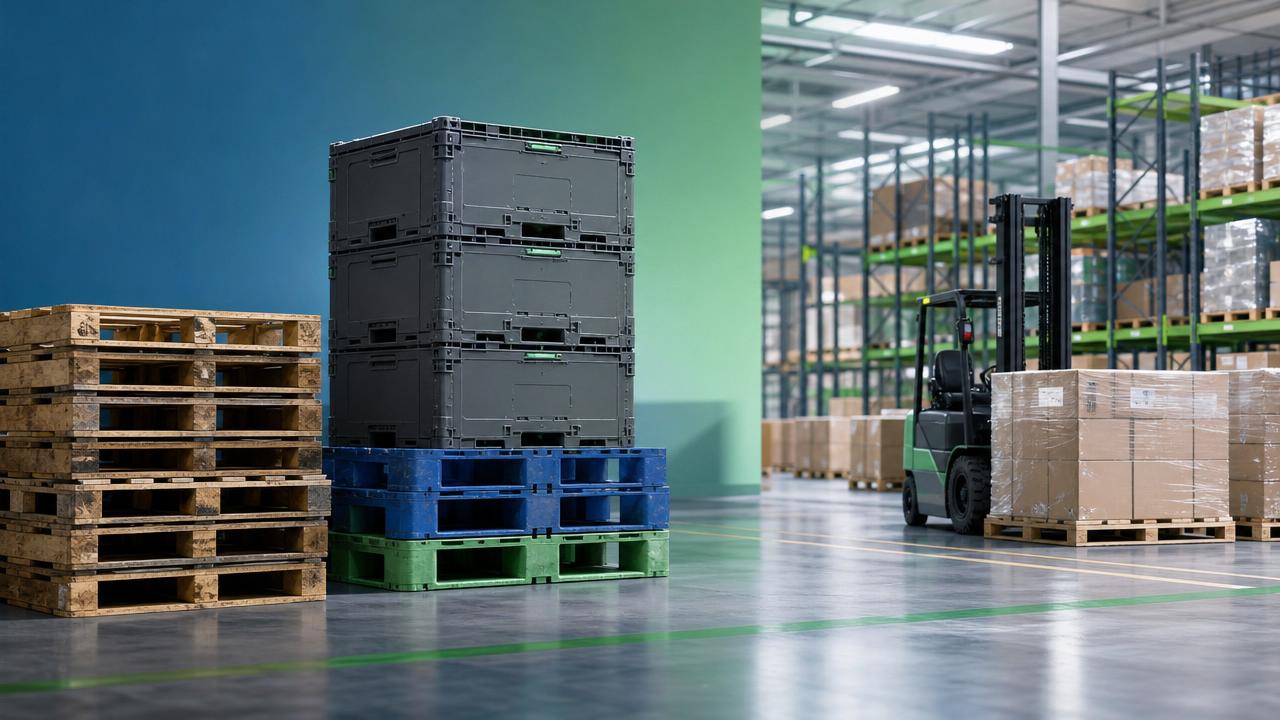
Rising wooden pallet price pressure is reshaping margins across distribution channels in the rubber and plastics sector. Cost increases no longer come from one source alone.
Timber volatility, labor expense, freight instability, and compliance requirements are all influencing pallet sourcing. As a result, resale pricing has become harder to predict and harder to defend.
For companies handling plastic products, turnover boxes, waste containers, and industrial storage systems, pallet strategy now affects cash flow, inventory efficiency, and customer retention.
Understanding Wooden Pallet Price Pressure
The term wooden pallet price covers more than the purchase cost of a pallet. It also reflects supply reliability, treatment standards, repair rates, and transportation efficiency.
In the rubber and plastics industry, pallets move raw materials, finished goods, bins, and reusable packaging. Small cost shifts can multiply quickly across frequent shipments.
Recent pricing pressure is strongest when distributors rely on high turnover, long transport routes, or mixed export requirements. In these cases, one unstable pallet cost can affect many product lines.
What is driving the increase
- Lumber price swings tied to regional supply and seasonal demand
- Higher fuel and freight charges for bulky pallet loads
- Labor costs in pallet assembly, sorting, and repair
- Heat treatment and export compliance expenses
- Damage, moisture exposure, and shorter service life
Where Distributors Feel the Biggest Impact
The effect of wooden pallet price inflation is rarely uniform. Margin pressure appears in specific operating points where handling intensity and replacement rates are high.
This is especially relevant for businesses moving plastic pallets, turnover boxes, trash cans, water tanks, hollow boards, and related industrial packaging products.
Why the Rubber and Plastics Supply Chain Is Sensitive
Rubber and plastics distribution often depends on repeat movement, stackable storage, and clean handling conditions. These needs make pallet quality directly linked to product protection.
When wooden pallet price rises, businesses may switch to lower-grade options. That can lead to cracking, nail exposure, moisture retention, and inconsistent dimensions.
Such issues matter in warehousing systems where stable stacking and easy sanitation support daily efficiency. They also matter in food, agriculture, and industrial logistics applications.
Shanghai Ximin Industrial Development Co., Ltd. serves this broader packaging and material-handling market with plastic pallets, iron pallets, wooden pallets, molded pallets, turnover boxes, bins, and related products.
Alternative Packaging Solutions Gaining Attention
As wooden pallet price pressure grows, many operations are reviewing reusable plastic transport systems. The goal is not only lower damage, but also more predictable lifecycle cost.
One practical example is the Industrial Stacking Foldable Large Plastic Turnover Box. It supports efficient movement and storage in logistics, warehousing, food, and agriculture.
Made from HDPE and LLDPE, it offers good impact resistance, durability, and easy cleaning. Its foldable and stackable structure helps save storage space between shipment cycles.
For operations comparing total handling cost, this kind of reusable container can complement or reduce dependence on unstable wooden transport platforms.
Typical Scenarios Where Price Pressure Becomes Visible
- High-volume regional distribution with frequent pallet replacement
- Export shipments needing treated wooden packaging
- Cold or humid storage where wood degrades faster
- Applications needing cleaner contact surfaces for packaged goods
- Multi-trip logistics loops where repair and return costs accumulate
In these settings, the quoted wooden pallet price is only the visible part of a broader cost structure. Damage rates and handling inefficiency often create the larger burden.
Practical Steps to Reduce Cost Exposure
A stronger response starts with measurement. Track not only unit purchase cost, but also lifespan, repair frequency, freight effect, and warehouse labor linked to each pallet type.
Recommended actions
- Compare total cost per trip, not just purchase price.
- Separate domestic and export pallet requirements.
- Review whether reusable plastic systems fit key routes.
- Standardize sizes to improve stacking and transport density.
- Reduce losses through return tracking and handling training.
This approach helps reveal whether rising wooden pallet price levels are temporary sourcing issues or a structural reason to redesign packaging flow.
A More Stable Next Step
Market pressure around wooden pallet price is unlikely to disappear quickly. Distributors that respond early can improve cost control and reduce operational disruption.
A balanced strategy may include wooden pallets for selected uses, plus plastic pallets or reusable turnover boxes for routes demanding cleanliness, durability, and repeat handling.
Review current pallet spend, identify the highest-loss scenarios, and compare alternatives using lifecycle data. Better packaging decisions often begin with one clear cost map.
For businesses in rubber and plastics logistics, that step can protect margins while supporting safer, cleaner, and more efficient material movement.
Related Posts
- Where Wooden Pallet Price Pressure Is Hitting Distributors
- Can Wooden Pallet Price Predict Maintenance Costs Later
- Wooden Pallet Price Benchmarks by Size and Load Class
- How Wooden Pallet Price Affects Packaging Budgets
- Wooden Pallet Price vs Plastic: Which Costs Less Now
- Wooden Pallet Price in 2026: What Is Driving the Increase
Products
Message

Leave a message
Have any questions or requests? Please leave a message and we will get back to you as soon as possible.