


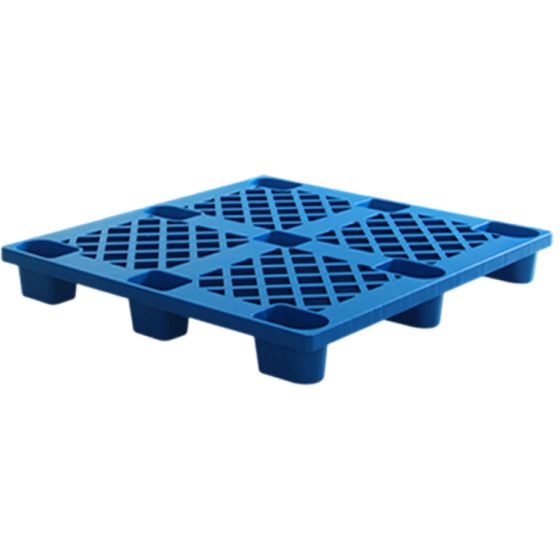
Choosing between nestable vs stackable plastic pallets is a critical decision for logistics efficiency, space optimization, and long-term cost control—especially for businesses in warehousing, manufacturing, and distribution. As a professional plastic pallet manufacturer, Shanghai Ximin Industrial Development Co., Ltd. helps you evaluate key factors like load capacity, storage footprint, handling compatibility, and reusability. Whether you need high-density nesting for returnable packaging or stable stacking for multi-tier racking, our custom-designed plastic pallets meet ISO, FDA, and anti-static requirements. Discover which solution—nestable vs stackable plastic pallets—best fits your operational needs and supply chain goals.
What’s the Real Difference Between Nestable and Stackable Plastic Pallets?
Nestable and stackable plastic pallets serve fundamentally different material handling objectives—despite sharing similar materials (e.g., HDPE or PP) and injection-molded construction. Nestable pallets are engineered with tapered legs and recessed bottom decks that allow one pallet to partially slide into another, reducing vertical storage height by up to 65% when empty. Stackable pallets, in contrast, feature flat, reinforced bottom surfaces and uniform top decks designed to bear full dynamic loads across multiple tiers—often supporting 3–5 layers under static warehouse conditions.
The distinction isn’t merely geometric—it reflects divergent operational priorities: nesting prioritizes return loop density and transport cost reduction, while stacking emphasizes stability, racking compatibility, and high-bay warehouse utilization. Misalignment between pallet type and workflow can trigger cascading inefficiencies: wasted cubic meters in outbound trucks, damaged goods from unstable stacks, or manual labor bottlenecks during unloading.
Shanghai Ximin Industrial Development Co., Ltd. produces both configurations using high-density polyethylene (HDPE) and polypropylene (PP), balancing chemical resistance, impact toughness, and service life of 3–5 years. Our Heavy Duty Plastic 6ft Custom Single Sided Plastic Pallet exemplifies this precision—engineered for cold chain logistics and chemical storage with moisture resistance and low-maintenance durability.
Which Applications Demand Nestable Pallets—and Which Require Stackable?
Application fit determines performance more than specification sheets ever could. Nestable pallets excel where empty return volume dominates cost structure—such as FMCG distribution centers shipping bottled beverages or grocery retailers managing reverse logistics. Their nesting ratio typically ranges from 3:1 to 5:1 (i.e., five empty pallets occupy the space of one loaded unit), cutting container utilization costs by 20–35% per round-trip cycle.
Stackable pallets dominate in environments requiring vertical consolidation: automated AS/RS warehouses, pharmaceutical cleanrooms, or chemical manufacturing lines where pallets remain loaded for extended periods. A 2-way entry design ensures compatibility with standard forklifts and pallet jacks, while flat-bottom geometry enables safe placement on cantilever or drive-in racking systems rated for ≥1,500 kg per level.
- Cold chain logistics: Requires consistent dimensional stability at -25°C to +40°C—stackable designs prevent leg deformation under thermal cycling.
- Chemical storage: Demands non-porous, corrosion-resistant surfaces—HDPE-based stackables resist acid vapors and solvent exposure better than nested variants with complex under-deck cavities.
- High-turnover e-commerce fulfillment: Benefits from nesting to compress empty pallet inventory during peak season surges (e.g., Black Friday returns).
Technical Comparison: Load Capacity, Footprint & Handling Compatibility
Beyond visual form, technical divergence defines functional boundaries. The table below compares core metrics across standardized Euro pallet dimensions (1200×800 mm) and heavy-duty 6ft variants—both commonly produced by Shanghai Ximin with ISO 9001-certified processes.
Note that weight differs significantly: nestables average 6–8 kg due to structural cutouts, while heavy-duty stackables like our Heavy Duty Plastic 6ft Custom Single Sided Plastic Pallet weigh 10 kg—optimized for load integrity over nesting convenience. This 25% mass increase directly correlates with enhanced impact absorption and fatigue resistance after 1,200+ handling cycles.
How to Choose Based on Your Supply Chain Profile
A robust selection framework considers three interlocking variables: cycle velocity, spatial constraint, and compliance scope. First, assess your pallet turnover frequency—if >80% of pallets return within 14 days and travel >200 km round-trip, nesting delivers measurable ROI. Second, audit warehouse cubic utilization: if floor-to-ceiling height exceeds 8 meters and racking depth exceeds 3 levels, stacking becomes operationally non-negotiable.
Third, verify regulatory alignment. FDA-compliant food-grade applications require seamless, cleanable surfaces—stackables with double-faced, smooth-top designs minimize bacterial harborage versus nested units with intricate under-deck geometries. Similarly, anti-static requirements for electronics assembly demand surface resistivity ≤10⁹ Ω—achievable only through controlled PP/HDPE formulations and post-molding treatments we implement across OEM orders.
- Evaluate your average empty pallet storage duration (target: ≤7 days for nesting viability).
- Measure maximum stacking height in current racking configuration (≥3 tiers favors stackables).
- Confirm certification needs: ISO 8611, FDA 21 CFR §177.1520, or EN 13698-1 for hygiene-critical sectors.
- Validate handling equipment compatibility—2-way entry supports 85% of global forklift fleets.
Why Partner With Shanghai Ximin for Your Plastic Pallet Solution?
As a vertically integrated manufacturer specializing in plastic pallets, turnover boxes, anti-static trash cans, hollow boards, and labor protection supplies, Shanghai Ximin Industrial Development Co., Ltd. bridges engineering precision with real-world logistics constraints. We’ve delivered custom OEM/ODM solutions to 37 international brands across automotive, pharma, and cold chain sectors—each requiring distinct material formulations, dimensional tolerances, and compliance documentation.
Our advantage lies in rapid iteration: from initial CAD review to functional prototype in ≤7 working days, and full production launch within 15–20 days for standard configurations. Every pallet undergoes 100% load testing per ISO 8611-1, with traceable batch records for FDA-regulated clients. And because we control raw material sourcing, mold maintenance, and QC workflows in-house, we guarantee fastest reply within 24 hours—not just for quotes, but for technical validation, certification support, and urgent sample dispatch.
Ready to align your pallet strategy with actual workflow demands? Contact us today to discuss load testing data, request dimension-specific CAD files, or schedule a free application audit—including racking compatibility analysis and nesting ratio simulation for your current fleet.
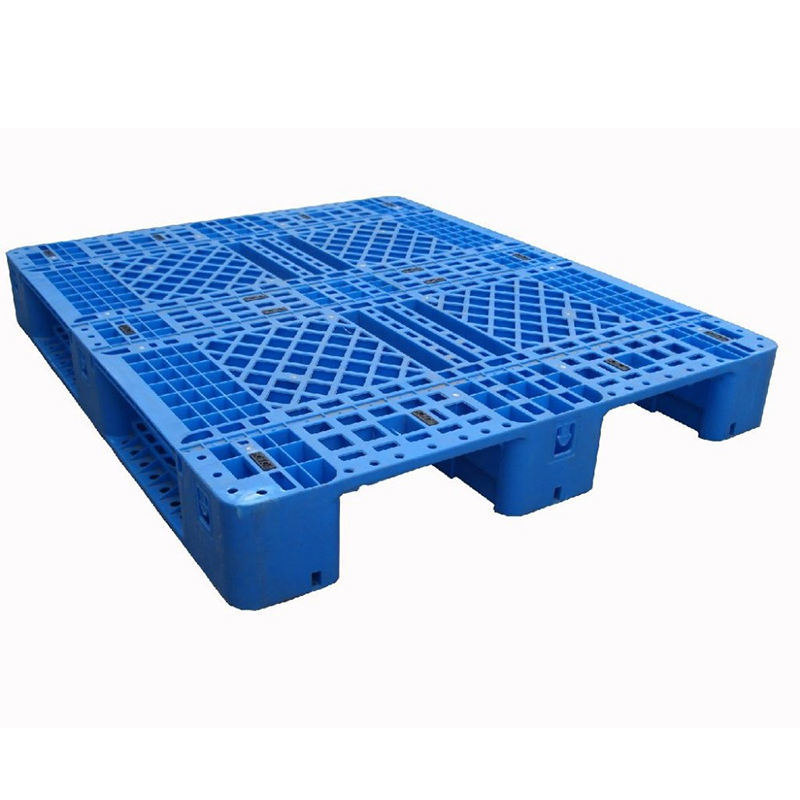
 800*600 supermarket European style shelf plastic palletXIMIN 806 Plastic Euro Pallet (800x600mm) offers superior moisture resistance for cold chain & warehousing. 4-way entry, 8kg lightweight, OEM/ODM supported.
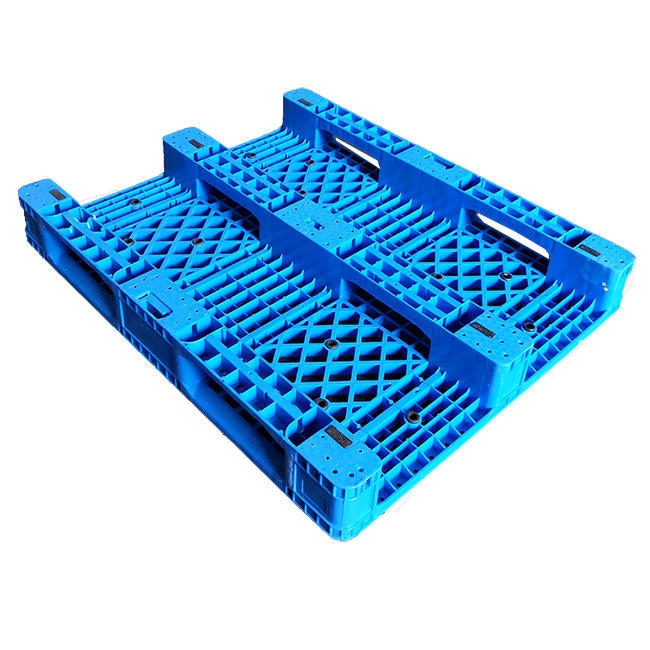
 1200x1200MM Industrial Shelf Plastic PalletDiscover XIMIN's 1200x1200MM Industrial Plastic Pallet, featuring superior moisture resistance, 4-way entry, and durable HDPE/PP construction. Ideal for cold chain logistics & chemical storage.
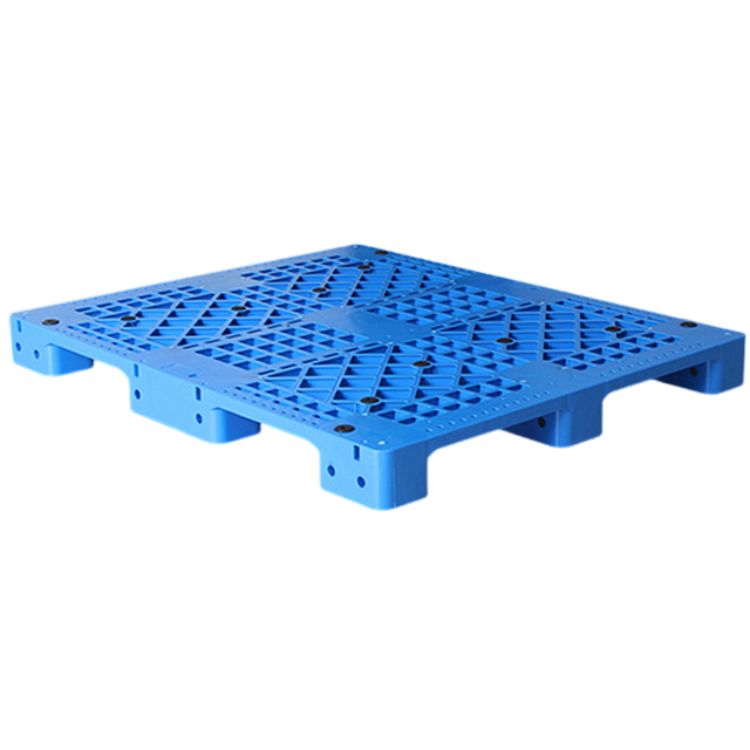
 120 X 120 Heavy Duty Plastic PalletDiscover our 120x120 heavy-duty plastic pallet with 6T static load capacity, made from HDPE/PP. Ideal for cold chain & chemical storage with moisture-proof features. Custom colors & sizes available.
Related Posts
- Industrial Crate Handling Rules for Safer Daily Operations
- 2026 Industrial Crate Demand and Margin Outlook
- 2026 Durable Euro Plastic Pallet Supply and Lead Time News
- How Plastic Box Ventilation Changes Product Protection
- How to Judge Load Safety in a Heavy Duty Large Pallet
- What Affects Heavy Duty Large Pallet Service Life Most
Products
Message

Leave a message
Have any questions or requests? Please leave a message and we will get back to you as soon as possible.