


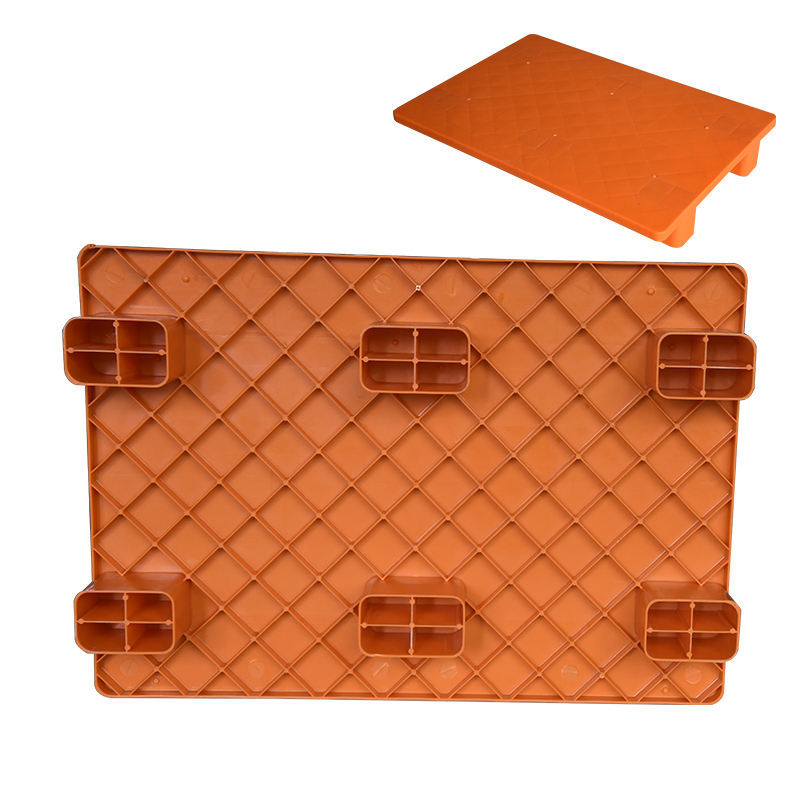
As global 3PL warehousing giants accelerate sustainability and efficiency upgrades, a quiet but significant shift is underway: from traditional wooden pallets to reinforced HDPE pallets. Why? Because reinforced HDPE pallets—durable, hygienic, recyclable, and compatible with automated systems—deliver superior total cost of ownership. At Shanghai Ximin Industrial Development Co., Ltd., a leading rubber and plastic manufacturer specializing in high-performance plastic pallets and logistics solutions, we engineer reinforced HDPE pallets that meet rigorous ISO, FDA, and export compliance standards—helping 3PLs future-proof their supply chains.
The Operational Reality Behind the Shift
Third-party logistics providers handle over 78% of global e-commerce fulfillment volume—and their warehouse throughput has increased by an average of 22% year-on-year since 2021. This surge demands pallets that withstand 5–7 handling cycles per day, operate flawlessly under AS/RS stacker cranes, and survive repeated wash-downs without warping or splintering. Traditional wooden pallets, while widely used, typically last only 3–5 months in high-intensity 3PL environments before requiring repair or replacement.
Reinforced HDPE pallets, by contrast, maintain structural integrity for 5–7 years under identical conditions—reducing annual pallet-related labor hours by up to 40% and cutting replacement frequency by 85%. Their consistent dimensional accuracy (±0.8 mm tolerance across 1200×1000 mm footprint) ensures seamless compatibility with robotic pick-and-place arms and conveyor belt sensors—critical for reducing system downtime.
This transition isn’t merely about longevity—it’s about predictability. A single failed wooden pallet can delay a full outbound trailer load by 12–18 minutes due to manual re-stacking and safety checks. Reinforced HDPE eliminates such variance through uniform weight distribution (max. deflection < 3.2 mm at 1,500 kg static load) and non-slip surface texture (coefficient of friction ≥ 0.52 on dry concrete).
Comparative Lifecycle & Cost Analysis
Total cost of ownership (TCO) calculations reveal why forward-thinking 3PLs now allocate >65% of new pallet procurement budgets to reinforced HDPE. While initial unit cost is 2.3× higher than standard Wood Pallet 1200*1000*162 Manufacturer of Wooden Pallets Industrial Wooden Pallet, TCO over 36 months favors HDPE by 31%—driven primarily by avoided labor, damage claims, and inventory loss.
The data confirms a strategic inflection point: durability alone no longer suffices. Compliance, automation readiness, and operational continuity now define pallet selection criteria. Shanghai Ximin’s reinforced HDPE pallets undergo ASTM D1185 impact testing (25 drops from 1.2 m onto concrete), UV stabilization for outdoor storage (5,000+ hours equivalent to 3 years Mediterranean exposure), and FDA-compliant resin formulation—ensuring full traceability from polymer batch to finished unit.
Material Science Meets Logistics Engineering
Reinforced HDPE isn’t just “plastic wood.” It integrates 30–40% recycled post-industrial HDPE with virgin resin and proprietary glass-fiber reinforcement (0.8–1.2 mm filament length). This hybrid matrix delivers tensile strength of 28–32 MPa—surpassing standard injection-molded PP pallets by 47% and matching structural performance of steel-reinforced composites at 1/5 the weight.
Crucially, Shanghai Ximin’s engineering process controls thermal expansion coefficients to ±0.00012 mm/mm·°C—preventing rack misalignment in temperature-controlled facilities ranging from -25°C frozen warehouses to 40°C cross-docks. Each pallet features molded-in RFID antenna cavities (compatible with Impinj Monza R6-P tags), integrated stacking lugs (3-point interlock design), and recessed corner guards meeting ISO 8611-1 edge impact requirements.
Unlike wood—which absorbs moisture and promotes microbial growth—HDPE’s non-porous surface achieves ISO 22196 antibacterial efficacy (≥99.9% reduction against E. coli and S. aureus within 24 hours). This directly supports cold-chain pharmaceutical logistics, where pallet sanitation audits now occur every 72 operating hours in GMP-certified facilities.
Implementation Roadmap for 3PL Operations
Transitioning pallet fleets requires phased execution—not wholesale replacement. Shanghai Ximin recommends a 4-stage rollout aligned with warehouse zone functionality:
- Stage 1 (Weeks 1–4): Deploy reinforced HDPE in high-value, high-turnover zones (e.g., e-commerce sortation, returns processing)—targeting 15–20% of total pallet count.
- Stage 2 (Weeks 5–12): Integrate into automated storage/retrieval systems (AS/RS) and robotic picking cells—leveraging pallets’ dimensional consistency and RFID readiness.
- Stage 3 (Months 4–6): Replace wood in temperature-sensitive areas (refrigerated, pharmaceutical, food-grade) to eliminate condensation-related slippage and contamination risks.
- Stage 4 (Months 7–12): Full fleet conversion with reverse logistics program for retired wooden pallets (Shanghai Ximin offers buyback at $2.10–$3.40/unit based on condition).
Lead time for custom-configured HDPE pallets is 12–18 business days from order confirmation, with MOQ starting at 300 units. All shipments include ISO 9001-certified test reports, material safety data sheets (MSDS), and batch-specific compliance documentation for FDA 21 CFR Part 117 and EU Regulation (EC) No 1935/2004.
Why Shanghai Ximin Delivers Trusted Reinforced HDPE Solutions
With over 18 years of specialization in rubber and plastic logistics products, Shanghai Ximin operates 4 ISO 9001-certified production lines dedicated exclusively to pallet manufacturing—including twin-screw extrusion for reinforced profiles and 2,500-ton injection molding capacity. Every reinforced HDPE pallet undergoes 100% automated dimensional scanning (CMM verification), dynamic load testing (1,500 kg static / 800 kg dynamic), and visual defect screening using AI-powered vision systems trained on 2.7 million pallet images.
Our portfolio extends beyond pallets to integrated logistics ecosystems: plastic turnover boxes with nested stacking ratios of 1:4.2, stainless steel trash cans rated for 100,000-cycle hinge operation, and anti-static containers compliant with ANSI/ESD S20.20 (surface resistance 10⁶–10⁹ Ω). For 3PLs seeking end-to-end material handling optimization, we provide free fleet assessment services—including pallet lifecycle mapping, ROI modeling, and automation interface validation.
The shift from wood to reinforced HDPE isn’t a trend—it’s an operational imperative grounded in physics, economics, and regulatory reality. As supply chains grow more complex and accountable, your pallet choice becomes a silent but critical component of brand integrity, customer trust, and bottom-line resilience.
Ready to calculate your TCO savings and schedule a technical consultation? Contact Shanghai Ximin Industrial Development Co., Ltd. today for a customized reinforced HDPE pallet solution engineered for your 3PL workflow.
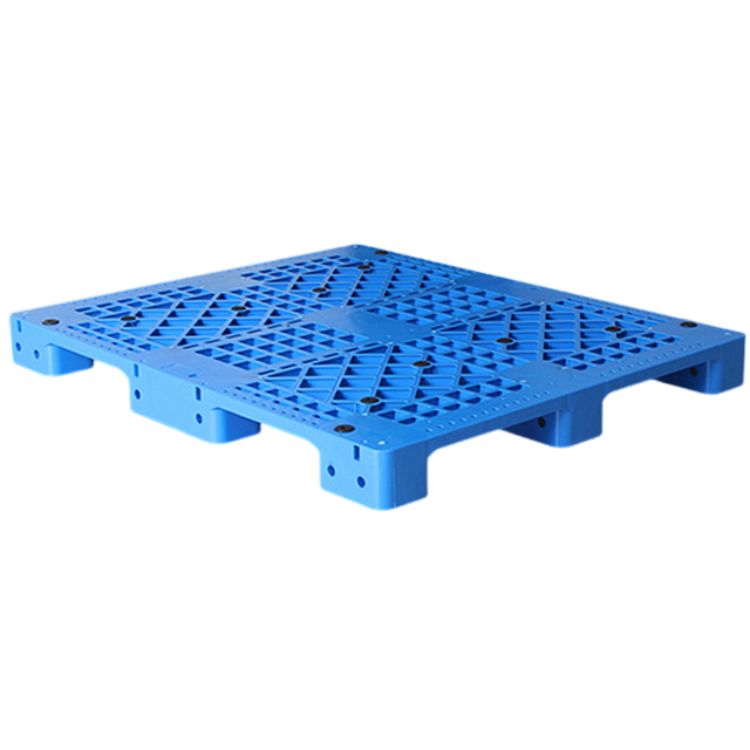
 120 X 120 Heavy Duty Plastic PalletDiscover our 120x120 heavy-duty plastic pallet with 6T static load capacity, made from HDPE/PP. Ideal for cold chain & chemical storage with moisture-proof features. Custom colors & sizes available.
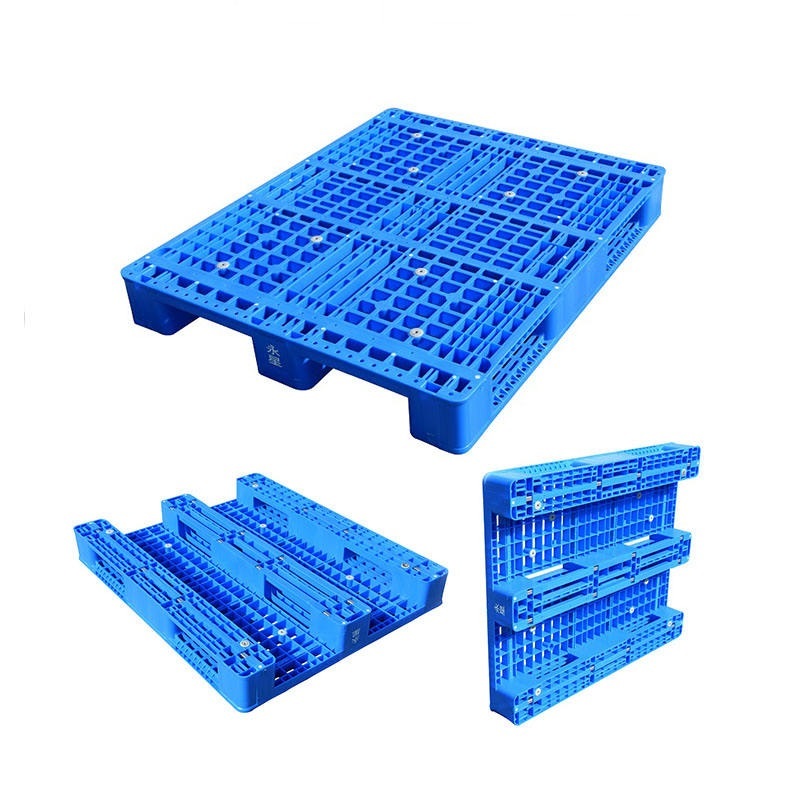
 HDPE Splicable Breathable Mesh Floor Ventilation TrayDiscover moisture-resistant HDPE plastic pallets with excellent waterproof performance, ideal for cold chain logistics and chemical storage. Durable, low-maintenance, and customizable.
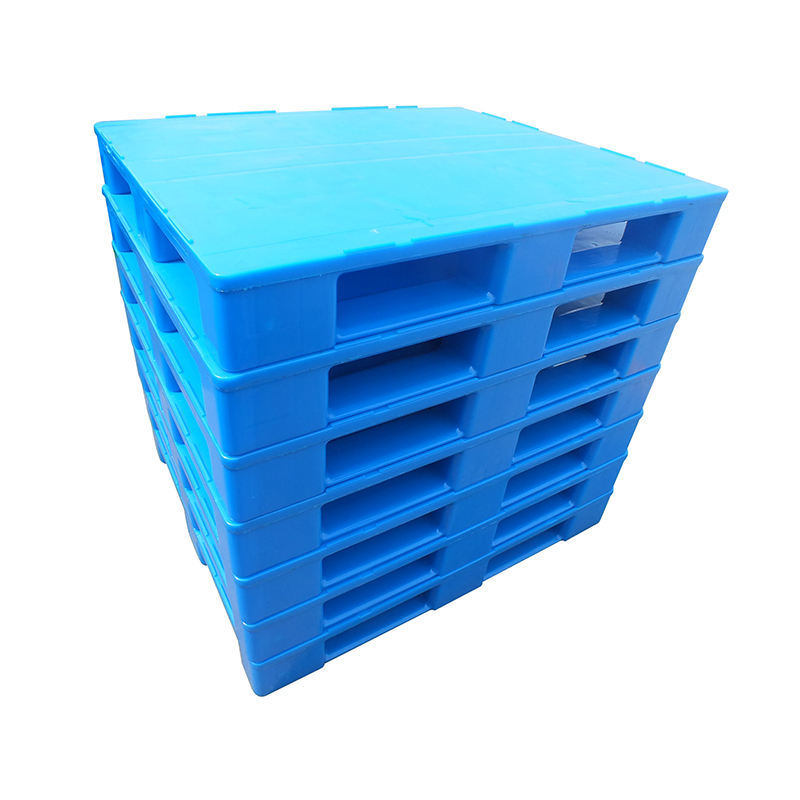
 Reinforced Plastic Storage Pallet Anti-Moisture Plastic Tray Heavy Duty 1200 X 1100 X 150mmXIMIN 1210 mesh heavy-duty plastic pallet (1200x1100x150mm) offers superior moisture resistance with HDPE/PP material. Ideal for cold chain logistics & chemical storage. OEM/ODM services available.
Related Posts
- How to Choose a Reliable Wooden Pallet Exporter
- Cheap Plastic Pallets vs Durable Ones: Which One Saves You More Money?
- Nestable vs Stackable Plastic Pallets: Which One Fits Your Business?
- Plastic Pallet vs Steel Pallet: Cost and Durability Comparison
- New vs Recycled Plastic Pallets: Which One Should You Choose?
- HDPE vs PP Plastic Pallets: What’s the Difference?
Products
Message

Leave a message
Have any questions or requests? Please leave a message and we will get back to you as soon as possible.