


NEWS
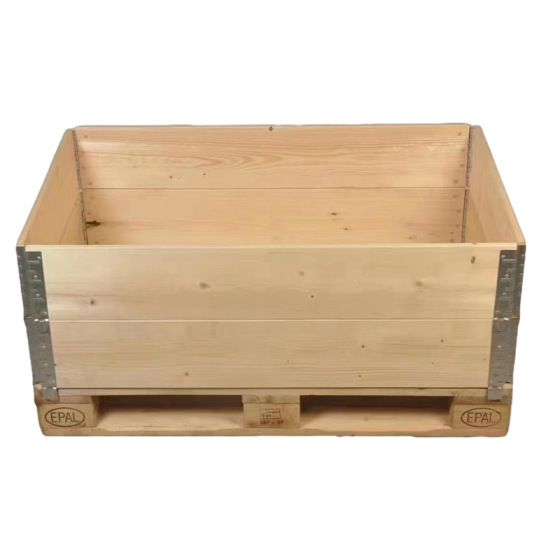
For quality control and safety teams, overlooking wooden pallet risks can lead to product damage, contamination, compliance issues, and workplace accidents. In 2026, choosing the right wooden pallet exporter and understanding wooden pallet performance standards will be more important than ever. This guide outlines the key risks you should know to improve handling safety, storage reliability, and supply chain control.
Why wooden pallet risks are becoming a bigger issue in 2026
Wooden pallets remain common in warehousing, export packing, and short-distance distribution, but they also introduce quality and safety variables that are harder to control than many buyers expect. For QC managers and safety officers in rubber and plastics operations, the real concern is not only pallet breakage. The bigger issue is variation in moisture, nails, splinters, biological contamination, and inconsistent load performance across different batches.
In 2026, supply chains are expected to face tighter hygiene expectations, stronger traceability requirements, and faster warehouse turnover cycles. In practical terms, pallets may move through 3 to 5 handling stages in less than 72 hours, including inbound unloading, temporary storage, internal transfer, order consolidation, and outbound loading. A weak or poorly specified wooden pallet can fail at any stage and create direct losses.
For plants handling polymer raw materials, finished plastic products, packaging items, and reusable containers, pallet condition affects more than transport efficiency. It influences floor cleanliness, forklift traffic safety, stack stability, and product appearance. A damaged plank or exposed fastener can tear stretch film, puncture bags, scratch molded surfaces, or create hazards during manual inspection.
This is why many safety teams now assess pallets through 4 core dimensions: structural integrity, contamination risk, compliance status, and lifecycle cost. Looking only at unit price is no longer enough. A lower-cost pallet that causes one rejected shipment, one operator injury event, or one contamination complaint may become the most expensive option in the system.
The 5 wooden pallet risks QC and safety teams should track first
- Moisture-related deformation, which can reduce stacking stability and change dimensional consistency during 2 to 4 weeks of storage.
- Splinters, protruding nails, and broken deck boards that increase handling injury risk and damage packaged goods.
- Dust, mold, insects, or odor absorption, especially in humid environments or mixed-use warehouse areas.
- Unclear treatment or marking status for export compliance, creating customs and quarantine delays.
- Inconsistent load-bearing performance between suppliers, batches, or repair histories.
If your site runs frequent forklift movement, multi-level stacking, or cross-border shipments, these risks should be evaluated before procurement approval, not after a failure occurs on the warehouse floor.
What are the main wooden pallet risk points in daily operations?
Daily use exposes wooden pallets to repeated impacts, humidity changes, edge loading, and irregular storage conditions. In a plastics-related factory, pallets may carry resin bags, molded bins, turnover boxes, or packaged finished goods with different point-load patterns. A pallet that performs well in light-duty use may become unstable when handling dense loads or unevenly distributed products.
Safety managers should also recognize that visible damage is only part of the picture. Internal cracks, nail loosening, and gradual deck fatigue often develop after dozens of handling cycles. When pallets are reused across 20 to 50 trips without a defined inspection interval, failure probability increases sharply, especially at the fork entry and bottom runner positions.
Contamination is another overlooked issue. Wood is porous, so it can absorb liquid, odor, and residue more easily than non-porous alternatives. This matters in food packaging support areas, agricultural transport, and any application where the pallet shares space with clean plastic containers or reusable handling units. Once contaminated, wooden pallets are harder to sanitize consistently.
The table below summarizes the most relevant risks for quality and safety teams and shows where the operational impact usually appears first.
From a control perspective, wooden pallet risk is rarely caused by one factor alone. Problems usually come from a combination of poor storage, unclear reuse limits, and weak incoming inspection. That is why a simple visual check at dispatch is often insufficient.
A practical 4-step inspection routine
- Check markings and source records at receiving, especially for export pallets or mixed supplier deliveries.
- Inspect top deck, bottom deck, and fork entry points for cracks, protrusions, and missing components.
- Assess cleanliness, dryness, and odor before moving pallets into storage or production-adjacent zones.
- Remove or segregate damaged units immediately and record recurring defects by supplier or batch.
A routine like this can be applied in less than 2 minutes per pallet sample during receiving audits and can significantly reduce avoidable downstream incidents.
Wood pallets vs plastic solutions: which option controls risk better?
For many rubber and plastics businesses, the key question is not whether wood can be used, but where wood still makes sense and where plastic solutions reduce total operational risk. Wooden pallets may remain acceptable for one-way export, low-frequency circulation, or cost-sensitive transport. However, for reusable closed-loop systems, hygienic handling, or areas with high forklift intensity, plastic alternatives often offer more consistent performance.
Shanghai Ximin Industrial Development Co., Ltd. supports this decision process with a broad product range that includes plastic pallets, wooden pallets, iron pallets, molded pallets, and plastic turnover boxes. This matters for procurement teams because a supplier with multiple material options can recommend by application rather than pushing a single format into every scenario.
When contamination control and cleanability become priorities, plastic handling products usually have an operational advantage. Non-porous materials are easier to wash, inspect, and standardize. This is especially relevant in food-related logistics, agricultural processing, and internal circulation of reusable bins, where 6 to 12 months of repeated handling can expose the hidden cost of fragile or hard-to-clean transport units.
The comparison below helps quality and safety teams evaluate where wooden pallets remain suitable and where plastic systems may offer stronger control.
The right choice depends on circulation frequency, hygiene level, export destination, and handling method. For example, a one-way shipment may justify wood, while an internal line feeding system used every day may be better served by plastic pallets or reusable plastic boxes.
Where foldable plastic turnover boxes fit into risk reduction
In operations where loose components, packaged materials, or semi-finished goods are transferred repeatedly, using a rigid or foldable plastic box can reduce exposure to dust, impact, and handling instability. One useful option is the Industrial Stacking Foldable Large Plastic Turnover Box, which is designed for logistics, warehousing, food, and agricultural applications.
Made from HDPE or LLDPE, this type of container offers good impact resistance, durability, large capacity, stackability, and easier cleaning than porous materials. In practical terms, it can help teams reduce open-load damage during repeated handling and save storage space when folded after use. For plants evaluating alternatives to wooden pallet plus carton combinations, this can be a relevant part of a safer internal transport strategy.
The point is not that one product replaces every pallet application. The point is that risk control improves when storage and transport units are matched to the product flow. That is where a supplier with pallets, bins, turnover boxes, and multiple material options can support a more accurate decision.
How should buyers evaluate wooden pallet exporters and performance standards?
Choosing a wooden pallet exporter should start with verification discipline, not sales language. Buyers should review whether the supplier can provide stable specifications, treatment status clarity, and consistent production records. In export business, the most common problems do not come from the pallet design alone. They come from mismatched documentation, unclear treatment marks, inconsistent dimensions, or weak batch control.
For QC teams, it helps to define 5 key checkpoints before approval: material condition, dimensional tolerance, load application type, moisture exposure risk, and compliance records. For safety teams, add 2 more checks: edge condition and fastener safety. Together, these 7 points form a practical baseline for purchasing review.
Performance standards should also be discussed in use conditions, not in isolated numbers. Ask whether the pallet will carry static loads in storage, dynamic loads during forklift movement, or racking loads in elevated positions. These 3 loading conditions are different. A pallet suitable for floor stacking may not be suitable for beam racking or repeated high-turnover handling.
The table below can be used as a procurement review tool when comparing wooden pallet exporters or mixed-material suppliers.
A practical supplier review should include sample testing, warehouse trial use, and written acceptance criteria. For many B2B projects, a 7 to 15 day sample evaluation period is more valuable than relying only on catalog descriptions.
What standards and compliance topics should be discussed?
Without overcomplicating the purchase, buyers should at least discuss export treatment requirements where applicable, fit-for-purpose load conditions, and internal acceptance standards. If the pallets are used with food packaging, agricultural products, or clean plastic bins, hygiene handling rules should be documented as part of receiving and storage procedures.
Minimum internal approval checklist
- Confirm whether the pallet is for export, domestic one-way use, or closed-loop circulation.
- Define 3 load states: storage, transport, and forklift handling.
- Document rejection criteria such as cracked boards, protruding nails, severe moisture, contamination, or missing marks.
- Set review frequency, such as every incoming batch or every quarter for reused stock.
This kind of structured review improves purchasing clarity and helps safety managers defend decisions during audits or incident reviews.
Common mistakes, FAQ, and a safer purchasing path
Many companies do not actually have a pallet problem. They have a specification and process problem. They buy based on unit price, reuse without inspection, and only react after product loss or operator complaints. In most facilities, better results come from defining the right application boundary for each pallet type and matching it with a realistic inspection routine.
Another common mistake is treating all reusable transport units as interchangeable. A wooden pallet, a molded pallet, a plastic pallet, and a foldable turnover box serve different risk profiles. Once product cleanliness, stack stability, and repetitive handling matter, the decision should move from basic purchasing to system design.
Below are the questions buyers and plant teams most often need answered before they finalize procurement or replacement plans.
How often should wooden pallets be inspected?
For incoming shipments, every batch should be visually checked at receiving. For internal reuse, many facilities adopt inspection by circulation frequency: high-turnover pallets may need weekly or biweekly checks, while lower-frequency stock may be reviewed monthly or quarterly. The right interval depends on forklift intensity, load type, and storage conditions.
When is plastic a better alternative than wood?
Plastic is often a better option when hygiene, washability, dimensional consistency, or repeated handling are priorities. It is especially useful in food logistics, agricultural circulation, and internal movement of reusable goods. If your operation needs easy cleaning, high stack repeatability, and lower contamination risk over 6 to 12 months of use, plastic solutions deserve serious evaluation.
What should QC focus on during supplier qualification?
Focus on specification consistency, documented use conditions, visible condition quality, and response capability when defects appear. Sample review should include actual warehouse handling, not just dimensional measurement. If possible, test at least 3 conditions: static storage, forklift transfer, and stacking or racking if applicable.
Can turnover boxes reduce wooden pallet-related risks?
Yes, in many internal handling workflows they can reduce exposure to open-load instability, dust, and packaging damage. For example, the Industrial Stacking Foldable Large Plastic Turnover Box can support large-capacity handling while remaining stackable, durable, and easier to clean. It is not a universal replacement, but it can significantly improve control in selected workflows.
Why choose us for pallet and material handling selection?
For QC personnel and safety managers, the biggest challenge is usually not finding a pallet supplier. It is finding a partner who understands how pallet choice affects damage rates, contamination control, operator safety, and delivery reliability across real industrial conditions. Shanghai Ximin Industrial Development Co., Ltd. offers a broad portfolio covering plastic pallets, iron pallets, wooden pallets, molded pallets, plastic turnover boxes, trash cans, tanks, hollow boards, and related industrial products.
This wider product capability helps procurement teams compare materials and handling formats more realistically. Instead of forcing one product into every scenario, the selection can be based on your load type, handling frequency, hygiene requirement, storage method, and budget range. That is especially valuable when a site operates mixed flows such as export shipment, internal circulation, and reusable packaging management.
If you are reviewing wooden pallet risks for 2026, you can contact us to discuss 6 practical topics: pallet type selection, load and stacking conditions, alternative plastic solutions, sample support, lead time planning, and quotation matching for your target use scenario. If needed, your team can also compare wooden pallets with plastic pallets or turnover boxes based on hygiene, reuse cycles, and storage efficiency.
A useful next step is to prepare 4 pieces of information before inquiry: product type, load weight range, storage method, and whether the flow is export or internal circulation. With those basics, it becomes much easier to confirm specifications, evaluate replacement options, and reduce avoidable handling and safety risks before purchase.
Related Posts
Products
Message

Leave a message
Have any questions or requests? Please leave a message and we will get back to you as soon as possible.