


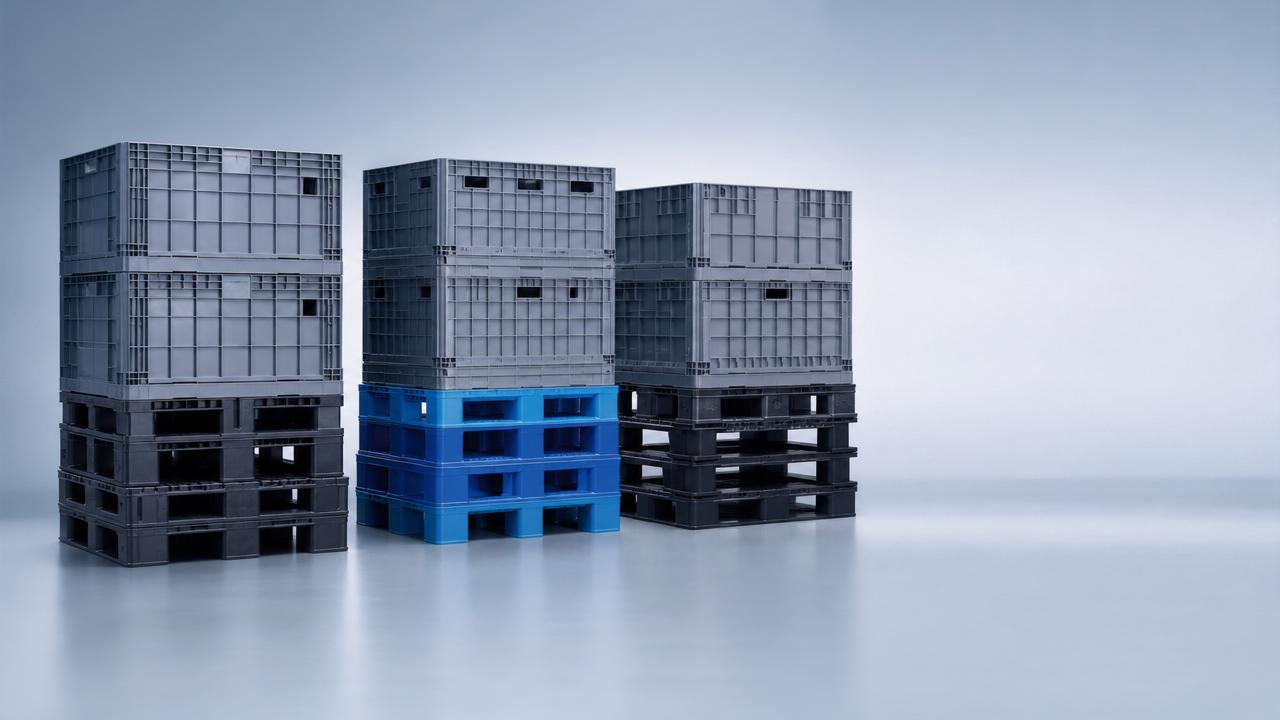
Are Heavier Stackable Large Pallets Always the Safer Choice?
When choosing a stackable large pallet, many assume more weight means more safety. That idea sounds logical, but it is often incomplete.
In rubber and plastic logistics, true safety depends on structure, resin quality, load balance, and working conditions. Weight is only one reference point.
A well-designed stackable large pallet can outperform a heavier option if its material, deck form, and support layout match the intended use.
Why a Clear Evaluation Method Matters
Plastic pallet selection affects storage stability, transport efficiency, cleaning needs, and replacement costs. Poor choices may increase breakage and product loss.
Using a simple checklist helps compare each stackable large pallet by real performance, not by appearance or mass alone.
Key Points to Check Before Choosing
- Check the raw material first. HDPE and PP offer different impact strength, rigidity, and low-temperature behavior for each stackable large pallet application.
- Review dynamic, static, and racking load ratings. Safe use depends on tested load limits, not only on the pallet’s own weight.
- Study the structural design. Ribbing, deck pattern, bottom support, and entry style strongly affect stability during stacking and forklift handling.
- Evaluate environmental exposure. Moisture, chemicals, cold rooms, and outdoor storage may change which stackable large pallet performs more safely.
- Confirm hygiene and maintenance needs. Easy-to-clean plastic pallets can reduce contamination risk and support longer service life.
- Compare dimensions with cargo footprint. Even a heavy pallet becomes unsafe if goods overhang or weight distribution is uneven.
Application Notes for Different Environments
Cold Chain Logistics
Low temperature can make some plastics less impact-resistant. In this case, material formulation matters more than simply choosing a heavier stackable large pallet.
For example, Reinforced Plastic Storage Pallet Anti-Moisture Plastic Tray Heavy Duty 1200 X 1100 X 150mm uses HDPE/PP, offers moisture resistance, and supports stable cargo handling.
Chemical Storage
Chemical areas require resistance to corrosion, spills, and repeated cleaning. Surface design and resin compatibility are critical safety indicators.
A double-faced design can improve contact support. A 1200x1100x150mm Euro pallet format may also help standardize storage and movement.
Commonly Overlooked Risks
Ignoring entry type is a common mistake. A 2Way pallet may fit some workflows well, but it must match existing equipment and turning space.
Another risk is focusing only on initial thickness. Some heavy pallets use more material without improving rib structure or long-term deformation resistance.
Cleaning is also underestimated. If residue stays in deck openings or corners, safety and hygiene may decline over time.
Practical Selection Steps
- List the real load, stacking height, and handling method.
- Match material and design to moisture, temperature, and chemical exposure.
- Request technical data, sample testing, and use-case confirmation.
- Compare maintenance cost, cleaning speed, and service life.
Shanghai Ximin Industrial Development Co., Ltd. supplies plastic pallets and related plastic products, with OEM and ODM support, in-house production, and ongoing material development.
Final Takeaway
A heavier stackable large pallet is not always the safer choice. The safest option is the one with the right material, structure, tested capacity, and environmental fit.
Before deciding, compare at least three pallet options against a fixed checklist. That approach improves safety, reduces waste, and supports better long-term value.
Related Posts
- Why One Wooden Pallet Quotation Can Differ by 20 Percent
- Are Heavier Stackable Large Pallets Always the Safer Choice?
- Cold Storage Can Change Plastic Large Pallet Performance
- Recycled Plastic Large Pallet or Virgin Material for Heavy Use
- What Changed in Plastic Large Pallet Demand in 2026
- Plastic Large Pallet Size Choices That Affect Container Fill
Products
Message

Leave a message
Have any questions or requests? Please leave a message and we will get back to you as soon as possible.