


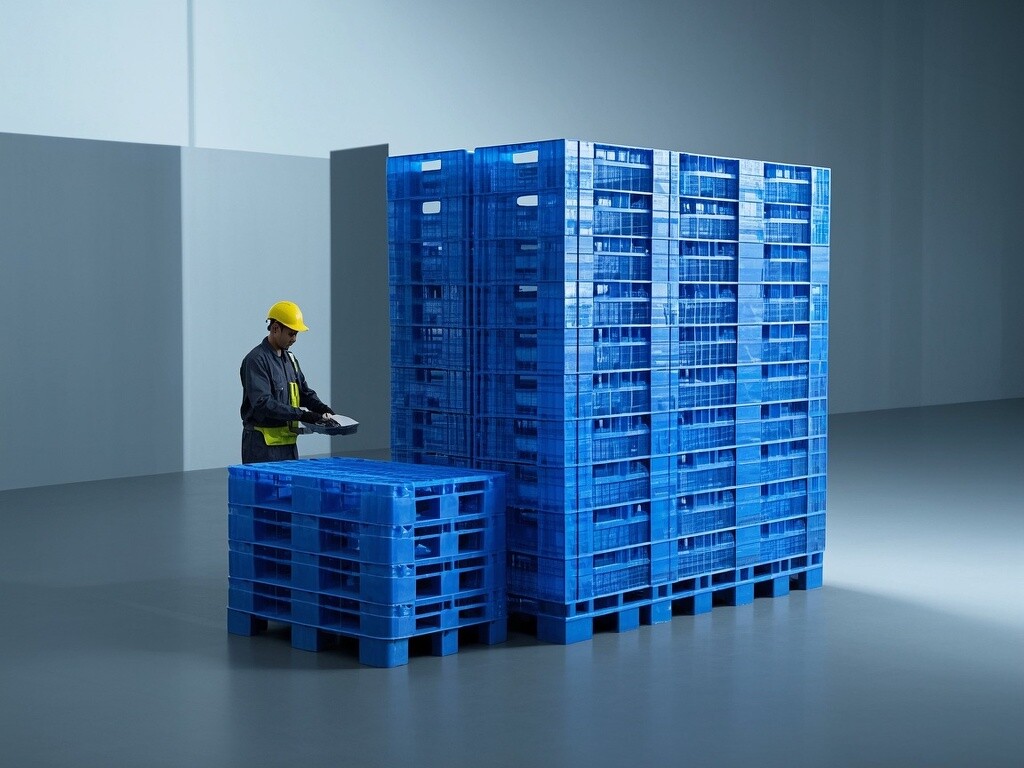
Choosing the right plastic large pallet size can directly impact container fill efficiency, freight cost, and load stability. For technical evaluators and procurement teams, understanding how pallet dimensions match product specs, stacking methods, and shipping requirements is essential to reducing waste and improving logistics performance. This guide explores the key size choices that help businesses optimize container space and select pallets with greater confidence.
In the rubber and plastics industry, pallet size is not only a warehouse handling issue. It affects cubic utilization inside 20-foot and 40-foot containers, the number of loading cycles, product protection in transit, and long-term pallet replacement cost. For companies shipping plastic products, bins, waste containers, tanks, or industrial supplies, even a 20mm mismatch between pallet footprint and carton pattern can create measurable dead space.
Shanghai Ximin Industrial Development Co., Ltd. manufactures plastic pallets and related logistics products for industrial use. For buyers comparing plastic, steel, wood, and molded pallet options, a structured evaluation of pallet dimensions, entry type, deck design, and material is often the fastest way to narrow down the right specification for export, cold chain, and chemical logistics projects.
How pallet size changes container fill performance
Container fill efficiency depends on three linked dimensions: pallet length, pallet width, and total loaded height. A large plastic pallet that looks suitable on the warehouse floor may still reduce container utilization if it leaves unusable side gaps, forces mixed stacking, or exceeds safe stacking height once cartons are added. In practice, procurement teams should calculate both floor footprint efficiency and cubic efficiency before final approval.
For many export operations, common pallet footprints such as 1200 × 1000mm, 1200 × 800mm, and 1100 × 1100mm are reviewed first. The right choice depends on product packaging pattern, not on pallet popularity alone. If the outer carton size is 400 × 300mm, for example, a 1200 × 1000mm layout may support 10 cartons per layer, while a different footprint may create edge overhang or leave 8%–15% unused deck area.
Another key factor is container internal size. A 40-foot high-cube container offers more usable height than a standard 20-foot container, but floor arrangement still determines how many palletized loads fit safely. If each loaded pallet reaches 1.6m in height, the project may need to choose between single stacking with higher product protection or reduced pallet height to increase load count.
Common size variables to evaluate
Technical evaluators usually compare at least 4 variables before selecting a plastic large pallet size:
- Footprint compatibility with carton or bin dimensions
- Loaded height after stacking 3–6 carton layers
- Forklift and hand pallet truck entry requirements, especially 4-way entry
- Static and dynamic handling conditions during export, storage, and unloading
The table below shows how size selection influences practical loading outcomes in industrial shipping.
The main conclusion is simple: the best pallet size is the one that matches the packaging module and shipping route together. A larger footprint does not automatically mean better fill. If the pallet size improves layer count by 1 carton but reduces container arrangement flexibility, the total landed cost may still rise.
Matching pallet dimensions to load stability and handling method
Size selection should never be separated from deck structure and handling style. In plastic pallet applications, large-format loads often fail not because of the pallet material itself, but because the chosen size creates unsupported carton edges or unstable top-heavy stacking. For export pallets used across 2–3 handling stages, reversible and double-sided designs can offer better durability where both pallet faces may see repeated contact.
In cold chain and chemical logistics, moisture resistance is another practical criterion. Wooden pallets may absorb water, gain weight, or degrade faster in wet conditions. A plastic pallet made from HDPE or PP generally offers more stable performance in humid environments, washdown areas, and applications where pallets may be exposed to condensate, spills, or repeated cleaning cycles.
A relevant option for these scenarios is 4-way perforated grid reversible double sided reversible custom plastic pallets. Model 1210SW-B uses HDPE or PP, weighs 20.5kg, supports 4-way entry, and is suited to cold chain and chemical logistics where moisture resistance and low maintenance are important considerations.
Handling checkpoints for technical review
Before approving a pallet size, review these 5 checkpoints with operations and warehouse teams:
- Confirm whether forklifts, pallet jacks, and conveyors require 2-way or 4-way entry.
- Check if the load is center-weighted, edge-weighted, or unevenly distributed.
- Measure loaded height tolerance, ideally within a controlled range such as ±20mm.
- Verify whether the pallet will be floor stacked, racked, or container loaded only.
- Assess whether wet, chemical, or low-temperature environments will accelerate wear.
The following comparison helps procurement teams separate size issues from structural performance issues.
In short, load stability depends on the interaction of size, deck form, and environment. A technically correct footprint should still be rejected if the pallet cannot support repeated 4-way handling, wet conditions, or double-sided use over a normal replacement cycle.
Procurement criteria that reduce total logistics cost
Procurement decisions should compare more than unit price. A pallet that costs less initially may create higher annual expense through lower container fill, more product damage, more frequent replacement, or slower loading. For many B2B buyers, evaluating total logistics cost over 12–24 months gives a more realistic result than comparing invoice price alone.
In plastics-related supply chains, the most useful buying framework includes 4 dimensions: dimensional fit, handling durability, environmental suitability, and supplier response capability. If one of these areas is weak, the cost impact may appear later through damaged edges, unstable stacks, rejected shipments, or warehouse inefficiency.
Shanghai Ximin Industrial Development Co., Ltd. supports buyers across plastic pallets, iron pallets, wooden pallets, molded pallets, plastic turnover boxes, trash cans, tanks, and other industrial plastic products. For technical teams, this broader product scope is valuable because pallet sizing decisions often need to align with the dimensions of boxes, bins, or downstream handling units rather than be assessed in isolation.
A practical procurement checklist
Use the checklist below when comparing 2–3 pallet suppliers or configurations for export projects.
- Request dimensional tolerances and confirm whether the actual size matches your carton matrix.
- Ask for material options such as HDPE or PP based on application temperature and contact conditions.
- Review pallet weight, such as 20.5kg, because tare weight influences handling and freight.
- Confirm OEM or ODM support if non-standard dimensions are needed for container fill optimization.
- Check response time and sampling cycle; a reply within 24 hours can reduce sourcing delays.
Common buying mistakes
Three mistakes are especially common: selecting by standard size without checking packaging modules, ignoring moisture exposure in cold chain operations, and assuming all reversible plastic pallets perform the same. In reality, a small mismatch in footprint or deck design can affect fill rate, stacking safety, and maintenance frequency throughout the supply cycle.
Suppliers with in-house manufacturing and technical drawing support can often shorten the adjustment process from concept to production. That is useful when a buyer needs a custom pallet to fit drums, bins, or packaged plastic products with unusual dimensions. For projects with recurring volume, even a 5% gain in container utilization can justify customization.
Implementation steps and final selection advice
A reliable pallet selection process usually takes 5 steps: collect packaging data, model pallet patterns, test handling access, verify environmental requirements, and confirm commercial terms. This sequence helps teams avoid approving a footprint that looks efficient on paper but performs poorly in real export handling.
Start with exact dimensions for cartons, bins, or containers to be palletized. Then test at least 2 footprint options and compare layer count, overhang risk, and loaded height. Where possible, run a pilot with actual warehouse equipment. Even one trial loading cycle can reveal whether a 4-way pallet improves maneuverability near container doors or during narrow-aisle transfer.
Next, verify the service environment. Cold chain, wet loading zones, and chemical logistics often favor moisture-resistant plastic pallets over absorbent alternatives. If the project requires a reversible double-sided design for longer life, make sure that feature is specified early rather than added after price comparison, when redesign can delay delivery by 1–2 weeks.
Selection summary table
The final decision should connect application conditions with pallet size and structure, as shown below.
For most technical evaluators and buyers, the right approach is to choose a plastic large pallet size only after confirming product dimensions, handling route, and shipping environment together. If you need support with standard or custom pallet sizing, material selection, or related turnover products, contact Shanghai Ximin Industrial Development Co., Ltd. to discuss specifications, request a tailored solution, and learn more about suitable options for your logistics project.
Related Posts
Products
Message

Leave a message
Have any questions or requests? Please leave a message and we will get back to you as soon as possible.