


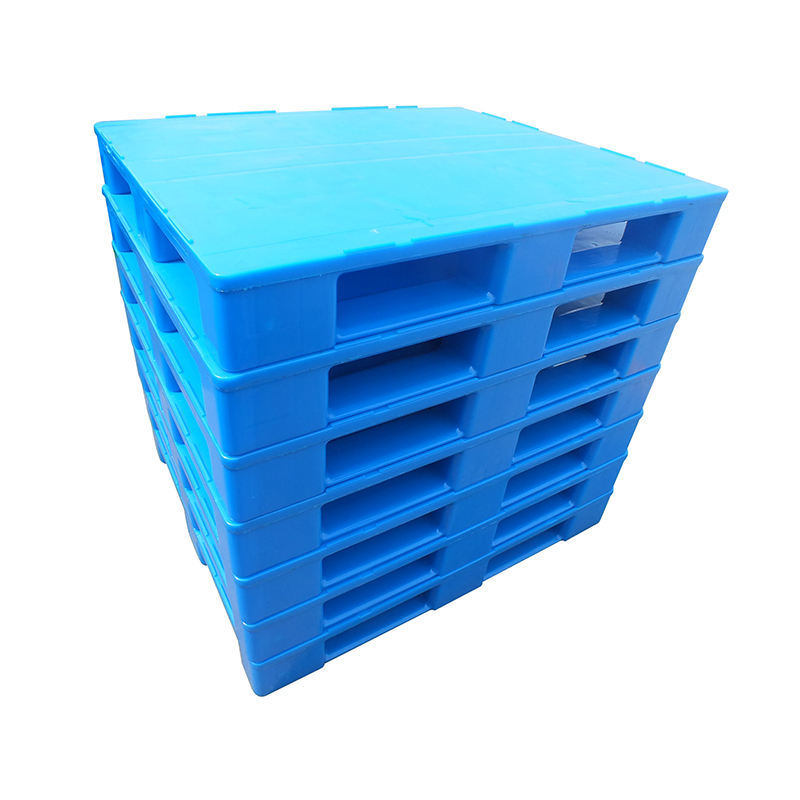
When selecting a plastic large pallet for heavy-duty applications, the choice between recycled plastic and virgin material directly affects load capacity, durability, and long-term cost. For technical evaluators and procurement teams, understanding these material differences is essential to matching pallet performance with demanding industrial environments and achieving reliable, cost-effective handling solutions.
Which Material Is Better for Heavy Use?
For heavy-duty pallet use, virgin material is usually the safer choice when the application involves high static loads, repeated racking, frequent forklift handling, or strict dimensional consistency. Virgin plastic generally offers more predictable mechanical properties, better impact resistance, and lower risk of hidden material variability. If failure risk is costly, virgin resin often justifies the higher upfront price.
That said, recycled plastic large pallets are not automatically unsuitable for heavy use. High-quality recycled material can perform well in closed-loop systems, floor stacking, and less impact-intensive operations. The key issue is not simply “recycled versus virgin,” but whether the pallet design, resin grade, reinforcement, and manufacturing control match the real operating environment.
For procurement teams, this means the right decision should be based on total application demands rather than purchase price alone. A lower-cost pallet that cracks, warps, or loses load stability too early can create greater cost through product damage, handling delays, and replacement frequency.
What Technical Evaluators Should Compare First
The first factor to assess is load condition: static load, dynamic load, and racking load. Many pallets look similar on paper, but material quality becomes critical when loads are moving, stored for long periods, or supported on rack beams. Recycled material may be adequate for static warehouse use, while virgin material is often preferred for dynamic or rack-supported heavy applications.
The second factor is environmental exposure. Cold storage, humidity, chemical contact, and outdoor temperature variation all affect plastic performance. In these cases, consistency matters. Virgin HDPE or PP can provide better stability across repeated cycles, while lower-grade recycled blends may become brittle in cold environments or deform under long-term stress.
The third factor is impact and fatigue resistance over time. Heavy-use pallets are rarely damaged in one event alone. More often, failure comes from accumulated stress at fork entry points, deck surfaces, or bottom runners. Technical teams should request test data, cycle-life expectations, and evidence of performance in similar industries rather than relying only on nominal load ratings.
When Recycled Plastic Makes Commercial Sense
Recycled plastic pallets can be a strong option when sustainability targets, budget limits, and moderate-duty handling requirements need to be balanced. In many internal logistics systems, especially where pallet circulation is controlled, recycled material can provide acceptable service life at a lower acquisition cost.
This is particularly true when the pallet is used for floor storage, short transport distances, or applications where cosmetic appearance is not important. If the supplier uses controlled recycled feedstock and maintains stable molding quality, recycled pallets may deliver solid value with reduced environmental impact.
In moisture-sensitive environments, buyers may also consider specialized platform products beyond traditional pallets. For example, in cold chain logistics or chemical storage, HDPE Splicable Breathable Mesh Floor Ventilation Tray offers moisture-resistant, waterproof, breathable, and splicable performance, with extremely low water absorption and easy cleaning. For certain storage layouts, such features can improve cargo protection in high-humidity areas while keeping maintenance costs low.
When Virgin Material Is the Better Long-Term Investment
Virgin plastic is usually the better fit when operations involve export standards, automation compatibility, high-value goods, or safety-critical handling. Because virgin material is more uniform, the pallet is more likely to maintain dimensional accuracy, deck strength, and impact performance over a longer service period.
For procurement, the value of virgin material often appears in reduced risk rather than only longer life. More reliable pallets can help minimize line stoppages, unstable stacking, product loss, and labor associated with frequent inspection or replacement. In demanding facilities, these hidden savings often outweigh the initial price difference.
Virgin material is also worth prioritizing when the business needs customized solutions with consistent repeatability. Manufacturers with in-house production and OEM/ODM capability can better align resin choice, structural design, and tooling with the user’s real handling requirements, instead of forcing a standard pallet into a high-stress use case.
Questions Buyers Should Ask Before Making a Final Decision
Start with practical questions: What is the true maximum working load? Will the pallet be racked? How often will forklifts or pallet jacks hit it? Will it be used in cold rooms, wet zones, or near chemicals? A material decision without these answers is incomplete.
Next, ask suppliers for more than a brochure. Request material type, test conditions, expected service life, and examples from similar applications. If a supplier can explain resin selection, structural reinforcement, and quality control clearly, that is a positive sign. If the answer focuses only on price, caution is warranted.
Finally, compare total cost of ownership. Include purchase cost, replacement cycle, cleaning needs, breakage rate, and cargo protection. In some environments, a moisture-proof, customizable solution such as the HDPE Splicable Breathable Mesh Floor Ventilation Tray may serve as a complementary handling or storage platform where standard pallets are not the best fit.
Conclusion
For heavy-use applications, virgin material generally provides the most reliable performance, especially where load demands, environmental stress, and handling intensity are high. Recycled plastic can still be a smart choice in controlled, moderate-duty systems when the supplier maintains stable quality and the application risk is lower.
The best buying decision comes from matching material properties to real operating conditions, not from choosing the cheapest or most familiar option. Technical evaluators should focus on load type, environment, fatigue resistance, and quality consistency, while procurement should assess lifecycle cost and operational risk.
In short, if failure is expensive, choose performance certainty. If the duty cycle is manageable and sustainability plus cost matter most, a well-made recycled pallet may be enough. The right answer is application-specific, but a disciplined evaluation process will make that answer much clearer.
Related Posts
- Cold Storage Can Change Plastic Large Pallet Performance
- Recycled Plastic Large Pallet or Virgin Material for Heavy Use
- What Changed in Plastic Large Pallet Demand in 2026
- Plastic Large Pallet Size Choices That Affect Container Fill
- 2026 Wooden Pallet Risks You Should Know
- How a Wooden Pallet Exporter Handles Compliance
Products
Message

Leave a message
Have any questions or requests? Please leave a message and we will get back to you as soon as possible.