


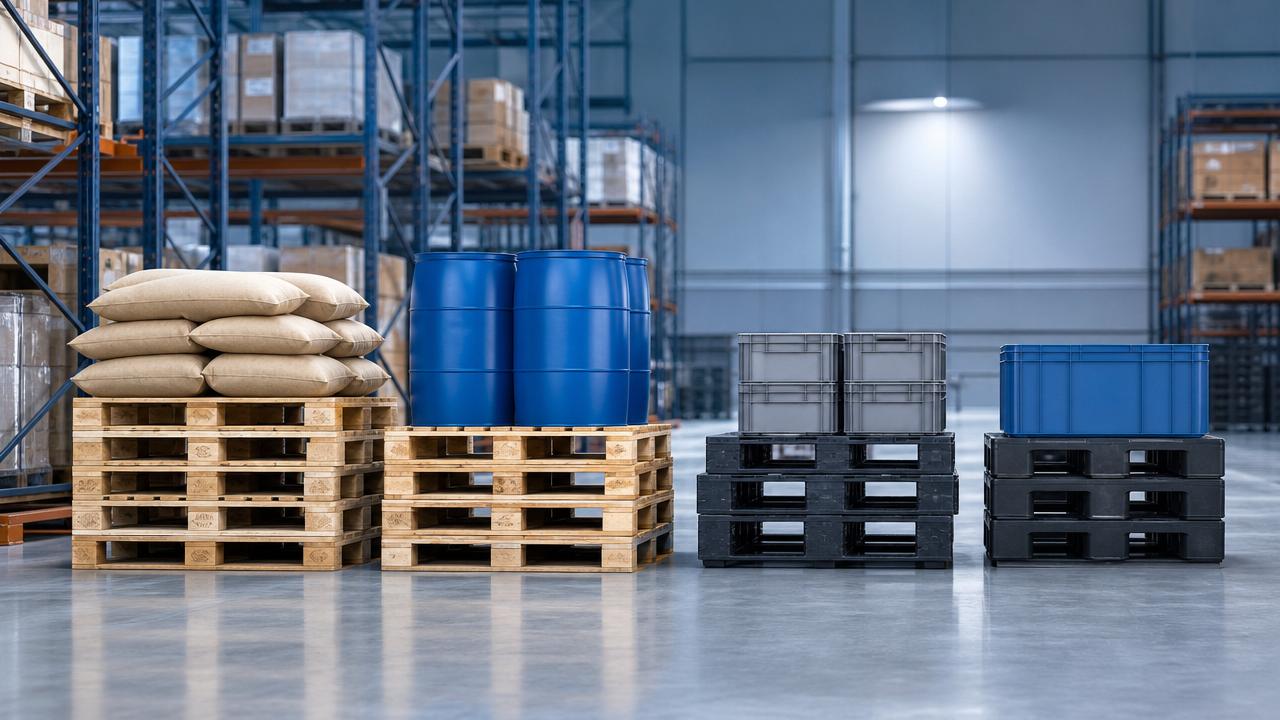
For technical evaluators comparing logistics assets, understanding wooden pallet price benchmarks by size and load class is essential for balancing performance, durability, and procurement cost. This guide outlines practical pricing factors, from material grade and pallet dimensions to static and dynamic load requirements, helping you assess suitable options with greater accuracy and purchasing confidence.
How to Read Wooden Pallet Price Benchmarks in Industrial Procurement
A useful wooden pallet price benchmark is never just a number per unit. For technical teams, it is a combined view of pallet size, timber grade, moisture condition, joint design, deck thickness, and required load performance in transport or storage.
In the rubber and plastics sector, pallet selection often supports resin bags, chemical additives, molded parts, returnable bins, and export shipments. That means buyers must compare not only purchase cost, but also hygiene risk, replacement frequency, compatibility with forklifts, and environmental exposure.
Shanghai Ximin Industrial Development Co., Ltd. supplies multiple pallet types, including plastic pallets, iron pallets, wooden pallets, molded pallets, and turnover boxes. This broad product scope helps evaluators compare wooden pallet price against realistic alternatives instead of making a narrow one-material decision.
- Size changes raw material use and therefore directly affects the wooden pallet price.
- Load class determines board thickness, block structure, and nail quantity.
- Treatment requirements for export or sensitive storage can increase cost.
- Reusability expectations often make life-cycle cost more important than first cost.
Why technical evaluators often misjudge pallet cost
A common mistake is comparing a light-duty open-deck pallet with a heavy-duty warehouse pallet only by unit price. Another is ignoring repair rates, contamination issues, and dimension tolerances. In harsh logistics conditions, a low initial wooden pallet price can lead to a higher total operating cost.
What Size and Load Class Usually Do to Wooden Pallet Price
The table below gives a practical view of how size and load class influence wooden pallet price in industrial applications. These are benchmark tendencies rather than fixed market quotations, because timber origin, seasonal supply, and regional freight all affect final offers.
For evaluators, the key point is that dimensions alone do not define the wooden pallet price. A 1100 x 1100 mm pallet built for repeated forklift movement and racking can cost notably more than a same-size pallet intended only for static floor stacking.
Load classes worth separating during review
- Static load: the pallet remains at rest on the floor or in stable storage.
- Dynamic load: the pallet is lifted and moved by forklift or pallet jack.
- Racking load: the pallet spans beams and must resist deflection over time.
These three conditions should appear separately in supplier discussions. Without that separation, wooden pallet price comparisons become unreliable and can lead to under-specification.
Which Cost Factors Matter Most Beyond Basic Dimensions?
When procurement teams ask why quotations differ for similar pallets, the answer is usually found in technical details that are easy to overlook during early sourcing rounds.
- Wood species and density: harder timber improves load support but raises cost.
- Moisture level: untreated moisture variation can affect weight, mold risk, and dimensional stability.
- Fastener method: stronger assembly reduces failure risk in repeated handling.
- Deck configuration: closed or reinforced deck structures increase material use.
- Compliance needs: export treatments or plant-specific documentation may add cost and lead time.
Why moisture and contamination matter in plastics logistics
For rubber and plastics operations, moisture exposure can be critical. Resin packaging, additives, and finished components may be stored in humid areas, cold chain environments, or chemical zones. In such conditions, a low wooden pallet price may look attractive initially, but maintenance, hygiene control, and replacement frequency can offset that advantage.
This is where material substitution becomes part of the cost discussion. For example, buyers assessing reusable platforms in cold chain logistics or chemical storage may also review Heavy duty high quality plastic pallet 1100x1100MM reusable as a moisture-resistant option with 4-way entry and double-faced structure.
Wood vs Plastic Pallets: When Is Wooden Pallet Price Still the Better Value?
Technical evaluators should not assume one material is always better. The right choice depends on handling frequency, sanitation expectations, load consistency, and replacement budget. The table below helps compare wooden pallet price with plastic pallet economics from an application point of view.
If the logistics model is disposable or low-cycle, wooden pallet price can remain the more efficient choice. If turnover is high and exposure conditions are severe, plastic may provide stronger life-cycle economics despite a higher purchase price.
A practical substitution trigger
When you see recurring costs from breakage, mold control, manual sorting, or pallet-related product contamination, it is time to benchmark wood against reusable HDPE or PP alternatives. That review is especially relevant for technical teams handling export packaging, warehouse automation, or chemically sensitive goods.
How to Evaluate Wooden Pallet Price for Specific Industrial Scenarios
Cold chain and humidity-prone storage
In cold environments, condensation and repeated temperature variation can shorten wooden pallet service life. If the goods are wrapped well and use cycles are limited, wood may still work. If pallets must be reused frequently, technical teams should calculate replacement rate, drying needs, and cleaning effort.
Chemical storage and resin handling
Loads such as additives, drums, or bulk packaging require stable support and reliable fork entry. In these cases, wooden pallet price should be reviewed together with deck integrity, fastener retention, and any risk of liquid exposure. The lowest quote is rarely the safest industrial choice.
Export shipments
For export projects, treatment and documentation requirements can change cost quickly. Buyers should clarify destination rules, expected reuse, and damage tolerance before approving a benchmark. Missing compliance steps can cause delays that cost more than the pallet itself.
Procurement Checklist: What Should Technical Evaluators Confirm First?
Before comparing wooden pallet price from multiple suppliers, define the technical baseline. This avoids misleading offers and shortens approval cycles.
- Confirm pallet size, entry type, and whether the pallet must work with existing racks, conveyors, or forklifts.
- Separate static, dynamic, and racking loads in kilograms rather than using general terms like heavy duty.
- State whether the pallet is for one-way shipment, short return cycles, or long-term closed-loop reuse.
- Identify exposure conditions such as moisture, chemicals, low temperature, or contamination-sensitive storage.
- Ask for alternative material recommendations if repeated failure or sanitation concerns already exist.
A supplier with experience across wood, steel, and plastic solutions can usually give more balanced advice than one limited to a single material line. That matters when the goal is not just to buy pallets, but to reduce handling risk and improve logistics consistency.
FAQ About Wooden Pallet Price and Selection
How much does load class change wooden pallet price?
It can change price significantly because heavier duty designs require more timber, stronger assembly, and better structural stability. A medium-duty pallet and a heavy-duty pallet with the same outer dimensions are not directly comparable.
Is a lower wooden pallet price always better for factory logistics?
No. In technical evaluation, lower purchase price may increase breakage, sorting labor, hygiene control, or line interruptions. The better decision is the option that matches the actual handling environment and expected service cycles.
When should plastic pallets be evaluated as an alternative?
They should be evaluated when moisture resistance, dimensional consistency, repeated reuse, 4-way entry efficiency, or low maintenance is important. For example, the 1100 x 1100 mm reusable pallet format is often considered in cold chain logistics and chemical storage where wood faces operational limitations.
What documents or data should I request from suppliers?
Request size drawings, weight, entry type, structure style, intended load conditions, material description, and any treatment or application notes relevant to your site. For custom projects, OEM or ODM support and design confirmation are also important.
Why Choose Us for Pallet Comparison and Sourcing Support
Shanghai Ximin Industrial Development Co., Ltd. supports buyers who need more than a simple wooden pallet price list. Because the company produces and supplies plastic pallets, iron pallets, wooden pallets, molded pallets, plastic turnover boxes, waste containers, hollow boards, and related industrial products, technical teams can compare options across materials and use cases in one sourcing discussion.
If you are reviewing pallet cost for resin handling, warehouse storage, cold chain logistics, chemical storage, or export packaging, you can consult on dimension matching, load class confirmation, product selection, delivery timing, sample support, and customized solutions. If a reusable alternative is under review, Heavy duty high quality plastic pallet 1100x1100MM reusable can also be discussed in relation to moisture resistance, double-faced structure, and 4-way forklift access.
Contact us to compare wooden pallet price benchmarks with practical alternatives, verify technical parameters before procurement, and shorten the path from evaluation to quotation with clearer, application-based recommendations.
Related Posts
- Can Wooden Pallet Price Predict Maintenance Costs Later
- Wooden Pallet Price Benchmarks by Size and Load Class
- How Wooden Pallet Price Affects Packaging Budgets
- Wooden Pallet Price vs Plastic: Which Costs Less Now
- Wooden Pallet Price in 2026: What Is Driving the Increase
- Nestable Large Pallet or Rackable Type: Which Fits Better
Products
Message

Leave a message
Have any questions or requests? Please leave a message and we will get back to you as soon as possible.